
The best small balcony ideas focus on space-saving furniture, vertical greenery, smart storage, and cozy details that make every inch count. A narrow bench, foldable table, railing planters, wall-mounted pots, string lights, and a small outdoor rug can turn even a tiny balcony into a comfortable and functional retreat.
The key is to choose pieces that fit the scale of your space and serve a clear purpose. Furniture with hidden storage, foldable surfaces, and vertical planting can add functionality without taking over the floor. Before buying anything, measure the balcony and make sure there is still enough room to open doors, walk around comfortably, and care for your plants.
You can also use lighting and soft furnishings to make the balcony feel more inviting. Warm string lights or lanterns, comfortable cushions, outdoor rugs, and a simple color palette can transform a plain space into a cozy evening retreat.
Whether you want a reading corner, mini garden, coffee spot, or relaxing outdoor nook, you don’t need a major renovation to make a small balcony feel special. In this guide, you’ll find 23 small balcony ideas for maximizing limited space while adding charm, comfort, and functionality.
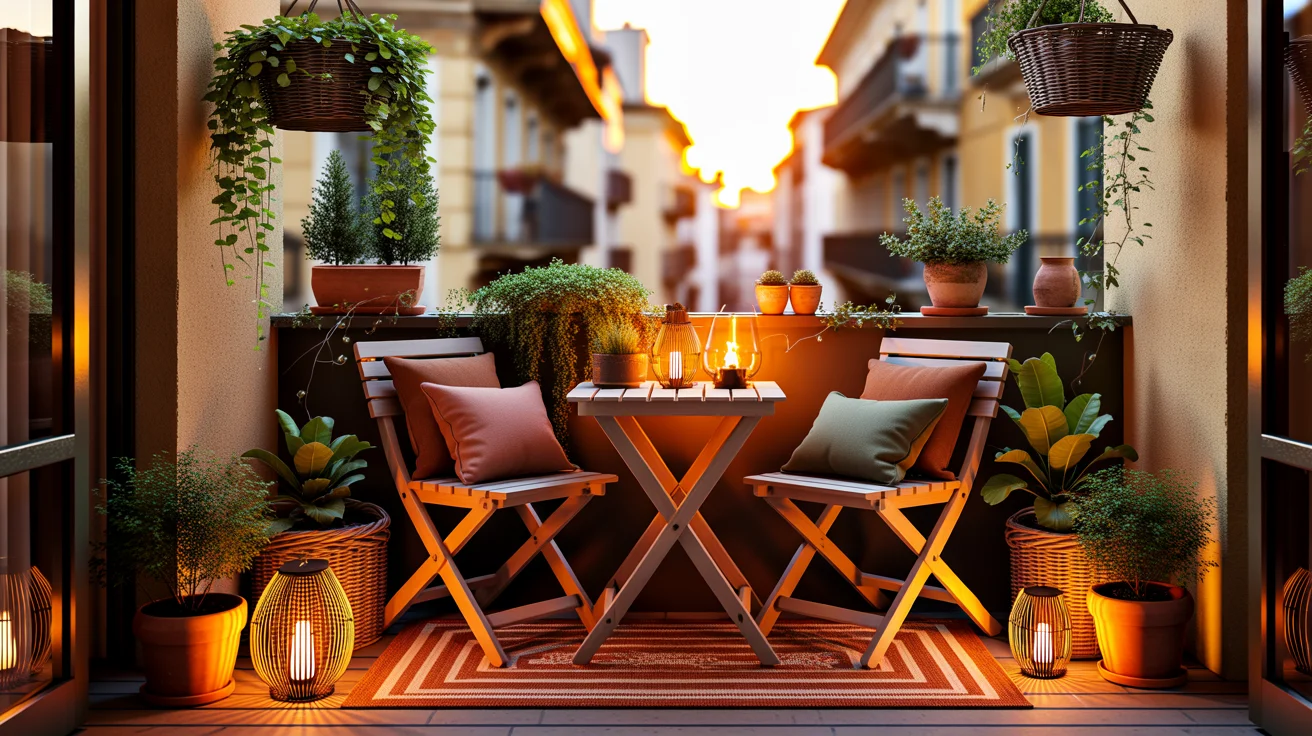
1. Add a Bistro Table Set
A compact bistro table instantly turns a small balcony into a charming breakfast nook. Choose a foldable table and two chairs so you can enjoy coffee, snacks, or even dinner outdoors without overcrowding the space.
A black metal or wooden bistro set creates a timeless look that works in almost every decorating style. Add a small vase of flowers or a candle to make the setting feel even more welcoming.
When choosing a bistro set, pay attention to the proportions of your balcony. A round table can work particularly well in tight corners because it has no sharp corners and allows easier movement around the seating area. For a narrow balcony, a small rectangular table placed against the railing may use the available space more efficiently.
If you want the furniture to feel less temporary, coordinate it with the rest of your balcony decor. Pair natural wood with woven planters and neutral cushions for a warm look, or choose black metal furniture with simple greenery for a modern appearance.
You can also choose a table with a folding or drop-leaf design. This gives you the flexibility to create more open floor space whenever you’re not eating or enjoying your morning coffee. Just make sure the furniture is designed for outdoor use and suitable for the weather conditions where you live.
Styling Tip: Place the bistro set near the brightest or most pleasant part of the balcony, then add one small plant or a simple outdoor centerpiece. Keeping the tabletop uncluttered will make the entire area feel more spacious.

2. Create a Vertical Garden
When floor space is limited, think upward. A vertical garden allows you to add flowers, herbs, and greenery while keeping the floor open for seating and movement. It is one of the easiest ways to make a narrow balcony feel greener without making it feel crowded.
Use wall-mounted planters, hanging pots, tiered plant stands, or a suitable trellis to create a lush green backdrop. Herbs such as basil, mint, rosemary, and thyme can make a vertical garden both attractive and useful, while trailing plants can soften plain walls and railings.
Before installing anything, consider how much sunlight the wall receives throughout the day. Choose plants that match those conditions rather than choosing them only for their appearance. It’s also important to make sure wall-mounted planters are securely installed and that excess water can drain safely without damaging walls or flooring.
For renters, freestanding vertical planters and hanging containers can be a practical alternative to permanently attaching anything to the wall. A narrow ladder-style plant stand can also create several levels of greenery while taking up very little floor space.
Styling Tip: Arrange plants at different heights and combine upright, trailing, and leafy varieties. Repeating similar pots or using a consistent color palette will make your vertical garden look intentional rather than cluttered.

3. Use Foldable Furniture
Foldable furniture is one of the best investments for a small balcony because it gives you flexibility without permanently taking up valuable floor space. Chairs and tables can be opened when you want to relax, eat, or entertain and folded away when you need more room.
Modern foldable furniture comes in beautiful finishes such as natural wood, black steel, and weather-resistant woven materials, making it both practical and stylish. Look for slim designs that can easily fit against a wall or railing when folded.
A folding bistro table can work especially well on a narrow balcony. You can open it for breakfast or evening drinks and then fold it down to create a clear walkway. Folding chairs can also be stored vertically in a corner or inside a nearby storage area when they’re not needed.
When choosing outdoor furniture, consider more than just appearance. Look for durable materials that can handle your local weather conditions, and choose pieces that are comfortable enough for the amount of time you plan to spend outside.
Styling Tip: Keep one or two foldable chairs paired with a compact table, then add a removable cushion or small outdoor rug. This creates a cozy seating area without making the balcony feel permanently furnished.

4. Add an Outdoor Rug
An outdoor rug can instantly make a small balcony feel more finished and comfortable. It visually defines the seating area and helps transform a plain concrete or tiled floor into something that feels more like an extension of your living room.
Choose a rug that fits comfortably beneath your main furniture without covering the entire balcony. Striped designs can make a narrow space feel more elongated, while simple geometric patterns add personality without overwhelming a small area. Neutral shades such as beige, cream, gray, or soft brown can create a calm and timeless look.
When shopping for an outdoor rug, choose a material designed to handle outdoor conditions. Look for options that are easy to clean and allow moisture to dry rather than trapping water underneath. If your balcony receives strong wind, make sure the rug is positioned securely so it doesn’t become a tripping hazard.
You can also use the rug to connect different elements of your balcony design. For example, a beige rug can complement wooden furniture and green plants, while a black-and-white pattern can work beautifully with modern metal furniture.
Styling Tip: Place the front legs of your chairs or sofa on the rug rather than leaving the rug completely separate from the furniture. This simple arrangement makes the seating area feel more connected and intentional.

5. Install String Lights
String lights create a warm and inviting atmosphere after sunset and can make even a very small balcony feel more special. Their soft glow adds visual interest without requiring bulky lamps or taking up valuable floor space.
Wrap outdoor-rated string lights gently around a railing, attach them along a suitable wall or overhead structure, or create a simple border around the seating area. If you have a narrow balcony, running the lights vertically or along the upper edge can draw the eye upward and make the space feel more thoughtfully decorated.
Choose lights with a warm, soft glow rather than extremely bright lighting if your goal is to create a relaxing atmosphere. Solar-powered options can be convenient where they receive enough direct sunlight, while plug-in or battery-powered lights can provide alternatives depending on your balcony setup.
Safety should come first when installing outdoor lighting. Use lights and extension equipment rated for outdoor conditions, keep electrical connections protected from moisture, and make sure cables are secured so they don’t create a tripping hazard.
Styling Tip: Combine string lights with a few potted plants, comfortable cushions, and a small table to create a cozy café-inspired balcony. Keep the rest of the decor simple so the gentle lighting remains one of the main features.

6. Create a Reading Corner
A comfortable chair and a small side table are all you need to turn an unused balcony corner into a peaceful reading nook. Instead of trying to fill the entire space, focus on creating one comfortable spot where you can sit, read, enjoy your morning coffee, or simply take a break outdoors.
Choose a compact lounge chair, folding chair, or small outdoor armchair that fits comfortably without blocking the balcony entrance. A narrow side table gives you a convenient place for a book, drink, phone, or small plant without taking up much floor space.
Add a soft outdoor cushion and lightweight throw to make the seating more comfortable. If your balcony receives strong sunlight, consider positioning the reading corner near a shaded area or adding an appropriate outdoor shade solution. This can make the space much more comfortable during warmer parts of the day.
You can make the corner feel more private by surrounding it with a few plants, a narrow vertical garden, or a suitable outdoor privacy screen. Soft lighting can also make the nook enjoyable after sunset.
Styling Tip: Keep the reading corner visually simple. One comfortable chair, one small table, a plant, and a soft cushion are often enough to create a cozy retreat without making a small balcony feel crowded.

7. Decorate with Lanterns
Lanterns bring warmth and charm to small outdoor spaces without taking up much room. They can provide a soft glow in the evening while also acting as decorative accents during the day. A few thoughtfully placed lanterns can make a simple balcony feel much more inviting.
Choose lanterns made from materials suitable for outdoor use, such as metal, weather-resistant wood, or durable glass. Battery-operated or solar-powered lanterns are convenient options for balconies because they don’t require an open flame or nearby electrical outlet. If you use candles, choose a stable, protected design and keep flames away from curtains, cushions, plants, and other flammable materials.
Mix lantern sizes to create visual interest and place them in corners, beside seating, or on a small table. Taller lanterns can fill an empty corner, while smaller ones work well as table decorations. You can also group two or three lanterns together to create a layered lighting effect.
For a cohesive look, choose lanterns that complement the existing style of your balcony. Black metal works well in modern spaces, while woven or natural-finish lanterns can create a relaxed boho or coastal feel.
Styling Tip: Place a larger lantern beside your reading chair or seating area and add one or two smaller lanterns nearby. Keeping the arrangement slightly uneven will make it feel natural rather than overly staged.

.
8. Add Hanging Planters
Hanging planters are a smart solution for small balconies because they add greenery without taking up valuable floor space. Instead of filling the ground with pots, you can use vertical areas to bring plants closer to eye level and create a fuller, more layered look.
Macramé hangers, metal baskets, railing planters, and suitable hanging containers can all work beautifully. Trailing plants are especially attractive because their leaves and stems naturally spill over the edges, creating a soft green effect. Depending on your growing conditions, options such as pothos, spider plants, ivy, or suitable trailing flowers can add plenty of character.
Before hanging a planter, make sure the support point is strong enough to hold the container, soil, and water. Remember that wet soil can be considerably heavier than dry soil. For apartments or rental properties, check any building rules before attaching planters to walls, ceilings, or railings.
Think about watering and maintenance when choosing their location. Hanging plants that are difficult to reach can become frustrating to care for, so place them where you can easily check the soil, trim growth, and water them safely.
Styling Tip: Hang planters at slightly different heights rather than creating a perfectly straight row. Combine different leaf shapes and pot textures to create a relaxed, natural balcony garden without overcrowding the space.

9. Use Built-In Bench Seating
Built-in bench seating is a smart way to maximize every inch of a small balcony. Instead of using several separate chairs that can make the space feel crowded, a narrow bench can provide comfortable seating while keeping the layout clean and organized.
One of the biggest advantages is the opportunity to add hidden storage underneath. A lift-up seat or built-in storage compartment can hold gardening tools, outdoor cushions, blankets, plant supplies, or other small items that you don’t want left around the balcony.
For a more comfortable seating area, add weather-resistant cushions in a color that complements your plants and outdoor rug. Neutral shades such as cream, beige, gray, or olive can create a calm appearance, while patterned cushions can add personality to a simple balcony.
If you’re renting or don’t want permanent construction, you can create a similar look with a slim outdoor storage bench. Choose one that fits tightly against the wall so the center of the balcony remains open for movement.
Styling Tip: Place the bench against the longest wall and keep the area in front of it relatively open. Add two or three cushions, a small side table, and a few plants nearby to create a comfortable seating zone without overwhelming the balcony.

10. Add a Privacy Screen
Privacy screens can make a small balcony feel more comfortable and secluded, especially if your outdoor space faces neighboring apartments, a busy street, or another building. They create a sense of separation without requiring you to completely close off the balcony.
Bamboo panels, outdoor curtains, wooden slats, lattice screens, and suitable outdoor fabric can all provide different levels of privacy. Bamboo and natural wood create a warm, relaxed look, while simple fabric curtains can give the balcony a softer and more elegant appearance.
A privacy screen can also serve a decorative purpose. Use it as a backdrop for hanging plants, climbing vines, string lights, or a small seating area. This allows one feature to solve a practical problem while also becoming part of your overall balcony design.
Before installing a screen, check your building or rental rules and make sure the material is securely attached. Balconies can experience strong wind, so lightweight or poorly secured screens may become unstable. Choose outdoor-rated materials that can handle the weather conditions in your area.
Styling Tip: Choose a screen that complements your existing furniture and plants rather than treating it as a separate feature. A natural bamboo screen paired with greenery and neutral cushions can create a relaxing, garden-like retreat while adding much-needed privacy.

11. Decorate with Cushions
Outdoor cushions are one of the easiest ways to make a small balcony feel more comfortable and inviting without taking up much space. They can instantly soften hard chairs and benches while adding color, pattern, and personality to your outdoor retreat.
Choose cushions specifically designed for outdoor use so they can better handle sunlight, moisture, and everyday use. Neutral shades such as beige, cream, and gray create a calm look, while terracotta, olive green, navy, or muted yellow can introduce a little more character.
Mixing patterns and textures can create a layered appearance, but try to keep the color palette consistent. For example, combine a simple striped cushion with a textured solid cushion and one small patterned accent. This creates visual interest without making a tiny balcony feel busy.
If storage is limited, choose cushions that are easy to stack or fold and keep them in a weather-resistant storage bench or container when they’re not being used. This helps protect them from moisture and keeps the balcony looking tidy.
Styling Tip: Use cushions to repeat colors already found elsewhere on the balcony. Matching a cushion to your outdoor rug, planter, or flowers can make the entire space feel more cohesive and intentionally decorated.

12. Start a Herb Garden
A balcony herb garden is both decorative and practical. Even if you have very little outdoor space, a few containers can provide fresh herbs for cooking while adding natural color and fragrance to your balcony.
Basil, mint, rosemary, thyme, parsley, and chives are popular choices for container gardening. However, the best herbs for your balcony will depend on your local climate, available sunlight, and how much care you’re able to provide. Herbs that need plenty of sun should be placed in the brightest suitable area.
Use individual pots or a narrow planter box to keep herbs organized. If space is limited, consider a vertical herb planter or railing containers. Make sure every container has adequate drainage, and avoid letting excess water collect around the roots.
One benefit of growing herbs in separate containers is that you can easily move them when needed. You can also group herbs with similar watering requirements together, making everyday maintenance simpler.
Styling Tip: Place your herb containers near your kitchen door or seating area where they’re easy to reach. Use matching terracotta, ceramic, or simple neutral pots to make the herb garden feel like part of the balcony decor rather than just a collection of gardening containers.

13. Add a Hammock Chair
A hammock chair can instantly turn an unused balcony corner into a relaxing retreat. Its suspended design creates a comfortable place to sit without the visual bulk of a large lounge chair, making it especially appealing for small outdoor spaces.
Choose a compact hammock chair with enough room to sit comfortably while still leaving space for movement around it. Woven, rattan-style, or fabric designs can complement different decorating styles, from boho and tropical to modern and minimalist.
Before installing a hanging chair, make sure the balcony structure or mounting point is specifically suitable for the chair and the expected load. Don’t attach a heavy hanging chair to an uncertain railing, ceiling, or decorative feature. If you’re renting, check whether permanent installation is permitted.
If a permanent installation isn’t practical, look for a freestanding hanging chair with a compact base. This gives you similar comfort while allowing you to move or remove the chair whenever necessary.
Styling Tip: Pair the hammock chair with one or two cushions, a small side table, and a nearby plant. Keep the surrounding area open so the chair remains the visual focal point without making the balcony feel crowded.

14. Use Multi-Functional Furniture
Furniture that serves more than one purpose is ideal for a small balcony because every piece needs to earn its space. Instead of choosing separate items for seating, storage, and surfaces, look for furniture that can perform several functions at once.
A storage ottoman, for example, can provide a comfortable place to sit while also keeping cushions, gardening supplies, or outdoor accessories hidden inside. A storage bench can work in the same way, giving you additional seating while keeping the floor free from clutter.
A small side table can also serve multiple purposes. Use it as a place for morning coffee, a plant stand during the day, or an extra surface when you’re entertaining. Folding tables and nesting tables are particularly useful because they can be moved or stored when they’re not needed.
When choosing multi-functional furniture, pay attention to scale. A piece that offers several functions is only useful if it doesn’t overwhelm the balcony. Measure the available space before buying and make sure doors, drawers, and storage compartments can open comfortably.
Styling Tip: Choose one main multi-functional piece as the foundation of your balcony, such as a storage bench, then add only a few smaller accessories. This keeps the space practical while maintaining a clean and spacious appearance.

15. Incorporate Wooden Deck Tiles
Wooden deck tiles can instantly transform a plain concrete or tiled balcony into a warmer, more inviting outdoor space. Their natural texture adds visual interest underfoot and can make the balcony feel more like a small patio or outdoor room.
Interlocking deck tiles are especially useful for balconies because many designs can be installed without permanent construction. They are available in materials and finishes that range from natural wood tones to wood-look alternatives, allowing you to choose an appearance that complements your furniture and plants.
Before installing deck tiles, make sure the existing balcony surface is clean, level, and suitable for the product. Good drainage is particularly important on balconies, so avoid blocking existing drains or creating areas where water can collect. Follow the manufacturer’s installation and maintenance instructions for the specific tile system you choose.
Wooden flooring also gives you an easy foundation for the rest of your balcony decor. Pair it with a neutral outdoor rug, woven furniture, green plants, and warm lighting for a cozy natural look. If you prefer a modern style, combine the wood tones with black metal furniture and simple planters.
Styling Tip: Use the deck tiles to visually define the main living area rather than covering the space with too many decorative layers. A few carefully chosen pieces can make the natural flooring stand out and give the balcony a polished, finished appearance.

16. Add a Small Water Feature
A small water feature can bring a sense of calm to a compact balcony without requiring much space. A tabletop fountain is particularly useful because it can sit on a sturdy side table, plant stand, or dedicated outdoor surface while creating gentle water sounds that make the area feel more peaceful.
Choose a compact fountain designed for outdoor use and place it on a stable, level surface. Look for a model with a quiet pump so the sound of the water remains relaxing rather than distracting. A simple stone, ceramic, or modern concrete-style design can also become an attractive decorative feature.
Because balconies have limited weight capacity and drainage, avoid large water features or heavy containers unless you know the structure can safely support them. Keep the fountain away from electrical connections and protect the surrounding furniture or flooring from splashing. Regularly clean the basin and follow the manufacturer’s instructions to keep the water fresh and the pump working properly.
A water feature can work especially well alongside greenery. Place it near a few potted plants, natural wood furniture, or smooth stone accessories to create a small spa-inspired corner.
Styling Tip: Keep the area around the fountain uncluttered. One small fountain surrounded by a few plants and a comfortable chair can create a peaceful focal point without taking over your limited balcony space.

17. Decorate with Fairy Lights and Candles
Combining fairy lights and candles can make a small balcony feel warm, intimate, and inviting after sunset. Instead of relying on bright overhead lighting, use several soft light sources to create a relaxed atmosphere for evening conversations, reading, or enjoying a quiet drink.
Wrap outdoor-rated fairy lights around the railing, along a suitable wall, or around a privacy screen. Choose warm-white bulbs for a cozy glow and avoid using too many strands, especially on a very small balcony. A simple arrangement can provide plenty of atmosphere without making the space feel visually busy.
Candles can add another layer of warmth, particularly when placed inside stable lanterns or enclosed holders. If your balcony is exposed to wind, battery-operated LED candles are often a more practical alternative because they provide a similar glow without an open flame.
Think about the overall balance of the lighting. Keep the brightest light near areas where you need visibility, such as seating or a small dining table, while using softer lights around plants and decorative corners.
Styling Tip: Combine warm fairy lights with two or three lantern-style LED candles around your seating area. Add a few plants and comfortable cushions, and you’ll have a cozy evening retreat without sacrificing valuable floor space.

18. Use Wall Shelves
Wall shelves are an excellent way to add storage and decoration to a small balcony without taking up valuable floor space. They make use of vertical areas that might otherwise remain empty while giving you a place to display plants, candles, small lanterns, gardening supplies, or decorative accessories.
Choose slim shelves that are appropriately rated for outdoor use and suitable for the wall or mounting surface. Natural wood shelves can add warmth to a balcony, while black or metal shelves create a cleaner modern appearance. If you’re decorating a rental, consider freestanding or removable storage solutions where permanent installation isn’t allowed.
Keep the shelves lightly styled rather than filling every available space. A few small plants, a ceramic pot, and one decorative object can create an attractive display while leaving enough empty space to keep the balcony feeling open.
Wall shelves can also be practical for gardening. Use one shelf for small herb pots, another for gardening tools, and another for decorative pieces. Just make sure heavier items are placed on securely mounted shelves and that water from plants won’t damage the wall or furniture below.
Styling Tip: Arrange objects at different heights and repeat one or two colors already used elsewhere on the balcony. This creates a cohesive display while keeping the small space visually organized.

19. Add a Bar Counter
A slim balcony bar counter creates a practical and stylish place to enjoy morning coffee, breakfast, or sunset views without taking up the floor space required by a traditional dining table. It can turn an otherwise unused section of the balcony into a useful little outdoor spot.
Wall-mounted counters work especially well on narrow balconies because they can run along the wall or railing while leaving the main walkway open. Pair the counter with one or two compact stools that can slide underneath when they’re not being used.
Choose materials that suit your outdoor conditions and complement the rest of your balcony decor. Natural wood can create a warm, relaxed atmosphere, while a simple black or neutral finish can give the space a modern appearance. If you are mounting the counter to a wall or railing, make sure the structure and hardware are suitable for the expected weight.
You can keep the countertop simple with a small plant, coffee tray, or weather-resistant decorative piece. Avoid overcrowding the surface so you still have enough room to comfortably eat or enjoy a drink.
Styling Tip: Install the counter along the side with the best view, if possible. Add two slim stools, a couple of cushions, and a small potted herb to create a cozy café-inspired balcony without sacrificing valuable space.

20. Create a Boho Balcony
A bohemian-inspired balcony feels relaxed, cozy, and full of personality. This style works especially well in small outdoor spaces because you can create a rich, inviting atmosphere through layers of texture and color rather than relying on large furniture.
Start with a comfortable floor cushion, compact lounge chair, or small outdoor sofa as the main seating. Layer an outdoor rug with patterned cushions and soft throws to make the space feel comfortable and collected. Natural materials such as rattan, wicker, jute, bamboo, and unfinished wood can add warmth and give the balcony a relaxed, organic character.
Plants are another important part of a boho balcony. Combine hanging planters, leafy potted plants, and trailing vines to create a lush backdrop. Add woven baskets or textured planters to reinforce the natural look without taking up too much floor space.
Lighting can complete the atmosphere. String lights, lanterns, and enclosed LED candles create a warm glow after sunset and make the balcony feel like a cozy outdoor room. Keep the color palette connected by repeating shades such as cream, terracotta, tan, olive green, or warm brown.
Styling Tip: Don’t try to match everything perfectly. Boho design looks best when different textures, patterns, and natural materials are layered in a relaxed way. Keep the largest pieces neutral and use cushions, rugs, plants, and small accessories to add personality.

21. Add Mirrors
Mirrors can make a small balcony feel brighter, more open, and visually larger by reflecting natural light and the surrounding space. They are especially useful when a balcony feels narrow or has limited access to direct sunlight.
Choose a mirror designed for outdoor conditions, or place it in a sheltered area where it is protected from excessive moisture and harsh weather. Weather-resistant framed mirrors can add a decorative element while serving a practical purpose.
Placement makes a big difference. Position the mirror where it can reflect greenery, an attractive view, or natural light rather than a cluttered wall. A tall mirror can emphasize height, while a wider mirror can make a narrow balcony appear more spacious.
You can also use mirrors as part of your overall decorating style. A simple black-framed mirror works well with modern furniture, while a rattan or wooden frame can complement a boho or natural balcony design.
Styling Tip: Place one medium-sized mirror behind a seating area or on a side wall, then surround it with a few plants. The reflection of greenery can create the impression of a larger, garden-like space without adding more floor clutter.

22. Create a Mini Dining Area
Even a tiny balcony can become a comfortable outdoor dining spot with the right furniture and layout. You don’t need a full-size dining table; a compact setup can give you a dedicated place to enjoy breakfast, lunch, or an evening meal while making the most of your limited space.
A small foldable table and two lightweight chairs are ideal for balconies because they can be moved or stored when you need more floor space. A narrow wall-mounted table can be an even better option for very tight balconies because it provides a useful dining surface without taking up much room.
Choose furniture that is proportionate to the balcony rather than simply choosing the smallest pieces available. You should still have enough room to pull out chairs and move around comfortably. Outdoor-rated wood, metal, rattan, and weather-resistant materials can all work well depending on your decorating style.
Add a few simple details to make the dining area feel more inviting. A small centerpiece, potted herb, outdoor placemat, or string lights can give the space personality without creating clutter. Keep decorations minimal so the table remains practical for everyday use.
Styling Tip: Position your dining set near the balcony railing if it offers a pleasant view. A narrow table with two compact chairs can create a charming café-style breakfast spot while leaving the rest of the balcony open for plants or a small lounge area.

23. Turn It into a Green Oasis
Turning a small balcony into a green oasis is one of the easiest ways to make the space feel more peaceful, private, and connected to nature. You don’t need dozens of plants or a large garden area. A thoughtful combination of potted plants, hanging baskets, and climbing greenery can create a lush atmosphere while keeping the available floor space manageable.
Start by choosing plants based on the amount of sunlight, wind, and moisture your balcony receives. Combine different heights to create depth: use a taller plant in an empty corner, medium-sized pots around the seating area, and trailing plants in hanging baskets or wall planters. This layered approach makes the balcony feel fuller without covering every surface.
Climbing plants can also add greenery vertically and provide a natural sense of privacy. Train suitable vines along a secure trellis or support rather than allowing them to spread randomly. If you’re renting, freestanding plant supports can provide a flexible alternative to permanent fixtures.
Don’t forget to consider maintenance. Group plants with similar watering needs together and choose a few low-maintenance varieties if you have a busy schedule. Use containers with proper drainage and place saucers underneath where appropriate to help protect the balcony surface from excess water.
Styling Tip: Create three levels of greenery—floor plants, waist-height planters, and hanging or climbing plants. Add a comfortable chair, warm lighting, and a small side table, and your balcony can feel like a private garden retreat even with very limited square footage.

Expert Tips for Designing a Small Balcony
Designing a small balcony is less about adding more decorations and more about making thoughtful choices with the space you already have. Before buying furniture or plants, consider how you actually use the balcony, how much sunlight it receives, and whether it is exposed to wind or rain. These factors can make a big difference in choosing furniture, plants, flooring, and outdoor accessories that will work well over time.
Start With the Balcony’s Measurements
Before purchasing anything, measure the available floor space, door clearance, railing height, and the areas where you plan to place furniture. A piece that looks compact in a store can feel surprisingly large on a narrow balcony.
Leave enough room to comfortably open the balcony door and walk around your furniture. Creating a simple floor plan or marking furniture dimensions with tape can help you visualize the layout before spending money.
Choose Furniture Based on How You Use the Space
Think about your main purpose for the balcony. If you want a morning coffee spot, a small bistro table may be enough. If you want somewhere to read, prioritize a comfortable chair. For entertaining, look for flexible seating such as a storage bench or lightweight stools.
Multi-functional and foldable furniture is particularly useful because it allows you to change the layout when necessary. This is often more practical than filling a small balcony with several single-purpose pieces.
Consider Sunlight and Weather Conditions
Plant selection should be based on the actual conditions of your balcony rather than appearance alone. Observe how much direct sunlight the area receives throughout the day and whether it is exposed to strong wind or heavy rain.
The same principle applies to furniture and decorations. Outdoor-rated fabrics, weather-resistant finishes, suitable planters, and properly protected lighting can help your balcony remain attractive with less maintenance.
Make Use of Vertical Space
When floor space is limited, walls, railings, and other suitable vertical areas can become valuable decorating zones. Hanging planters, wall shelves, climbing plants, and vertical gardens can add greenery and personality without taking up the space needed for seating.
Just make sure anything attached to a wall, ceiling, or railing is securely installed and permitted by your building or rental agreement.
Keep the Design Visually Simple
A small balcony can quickly feel crowded when too many colors, furniture pieces, and decorations compete for attention. Choose a simple color palette and repeat a few materials throughout the space.
For example, natural wood, cream cushions, green plants, and warm lighting can create a cohesive look without requiring many accessories. Leaving some open space is just as important as decorating because it helps the balcony feel larger and easier to use.
Prioritize Safety and Maintenance
A beautiful balcony should also be practical and safe. Avoid blocking drainage points, overcrowding the balcony with heavy items, or placing unstable furniture where strong winds could move it. Check product instructions before installing hanging chairs, shelves, privacy screens, or other fixtures.
For plants, use containers with adequate drainage and consider how watering will affect the balcony surface below. Small maintenance decisions like these can help keep your outdoor space enjoyable throughout the year.
Final Thoughts
Small balconies may have limited square footage, but they can still become some of the most enjoyable and useful spaces in your home. With thoughtful planning, you can combine comfortable seating, greenery, soft lighting, practical storage, and weather-friendly materials to create an outdoor retreat that feels both beautiful and functional.
The key is to choose pieces that work with the size and shape of your balcony rather than trying to fit too much into the available space. Foldable furniture, vertical planters, wall shelves, hanging baskets, and multi-functional seating can help you make better use of every inch while keeping the area comfortable and easy to move around.
Your decorating style can be simple or expressive. A modern balcony might feature clean-lined furniture and neutral colors, while a boho space can use woven textures, colorful cushions, plants, and warm lighting. Even a few small changes, such as adding an outdoor rug, string lights, or a compact herb garden, can completely change how the space feels.
Most importantly, design the balcony around how you actually want to use it. If you enjoy morning coffee, create a small dining nook. If you love reading, prioritize a comfortable chair. If plants make you happy, turn the balcony into a green oasis. The best small balcony is not necessarily the one with the most decorations, but the one that makes you want to spend more time outdoors.
With a little creativity and careful planning, even the tiniest apartment balcony can become a cozy extension of your home—a place to relax, enjoy fresh air, entertain guests, and create everyday moments you’ll look forward to.
Frequently Asked Questions
1. How can I make a very small balcony look bigger?
Use space-saving furniture, light colors, vertical planters, wall shelves, and a simple layout. Mirrors can also create the visual impression of more space by reflecting light and greenery. Most importantly, avoid overcrowding the floor and keep a clear walkway.
2. What furniture is best for a small balcony?
Foldable chairs and tables, narrow bistro sets, storage benches, compact stools, and multi-functional furniture are excellent choices. Look for pieces that can be moved, folded, or used for more than one purpose so the balcony remains flexible.
3. What plants are good for a small balcony?
The best plants depend on your balcony’s sunlight, temperature, wind, and available space. Herbs, compact flowers, succulents, trailing plants, and suitable climbing plants can all work well. Choose varieties based on the actual growing conditions rather than choosing plants only for their appearance.
4. How do I make my balcony more private?
Outdoor curtains, bamboo screens, lattice panels, privacy screens, and climbing plants can help create a more secluded atmosphere. A combination of a vertical screen and greenery can provide privacy while also making the balcony feel more like a garden.
5. How can I decorate a small balcony on a budget?
Start with a few high-impact changes rather than replacing everything. Add cushions, plants, string lights, an outdoor rug, or a small foldable table. You can also repurpose suitable containers, crates, or existing furniture to create plant stands and storage. Decorating gradually allows you to improve the balcony without spending a large amount at once.

