
A balcony garden or terrace garden can turn even a small outdoor space into a beautiful green escape with the right plants, containers, and layout. Flowers, herbs, vegetables, hanging planters, railing planters, vertical gardens, and compact plant stands can add greenery without taking up too much floor space, while a small chair, table, or soft lighting can make the area feel like an outdoor retreat.
The best garden setup depends on how much sunlight, space, and time you have available. Sunny balconies can support flowers, herbs, and vegetables, while shaded areas may be better suited to plants that prefer indirect light. For narrow spaces or rentals, movable containers, hanging baskets, and vertical displays make it easier to add greenery without permanent changes.
You can also build your garden gradually rather than trying to decorate everything at once. Start with a few easy-care plants, then add different heights, textures, pot styles, and comfortable seating to create a space that feels intentional and inviting.
Before choosing your plants, consider practical details such as watering, drainage, wind exposure, and direct sunlight. These small considerations can help you create a garden that not only looks beautiful but is easier to maintain.
In this guide, you’ll discover 20 balcony garden and terrace garden ideas ranging from colorful flowers and fresh herbs to vertical gardens, cozy reading corners, fairy lights, and compact vegetable gardens. Whether you have a narrow balcony, small terrace, or larger outdoor space, these ideas can help you create a green retreat you’ll actually want to spend time in.
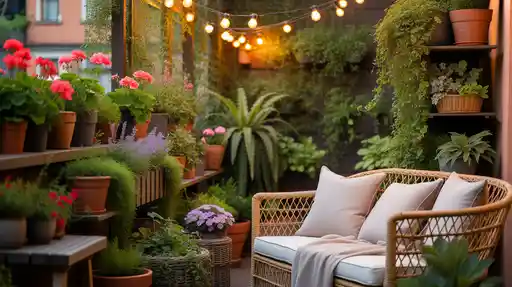
1. Create a Colorful Flower Corner
One day, Emma looked at her empty balcony and felt it looked boring. She bought a few flower pots and planted pink and yellow flowers. After a few weeks, her balcony looked cheerful and bright.
Flowers can make any space feel happy. Choose easy plants like marigolds, petunias, and daisies. Place them in colorful pots to make your garden look even prettier.
When choosing flowers for a balcony or terrace, consider how much sunlight the space receives during the day. Sunny balconies can support many flowering plants, while shaded areas may need plants that tolerate lower light. Using pots in different sizes can also create a layered display without taking up too much floor space.
You can place taller flowers toward the back and smaller plants near the front to create a fuller arrangement. If your balcony is very small, use railing planters or narrow plant stands to keep the floor open.
Styling Tip: Choose two or three complementary flower colors instead of mixing too many shades. This creates a more organized and attractive balcony garden.

2. Grow Fresh Herbs
Tom loved helping his mother cook. They planted mint, basil, and coriander in small pots on their terrace. Now they pick fresh herbs whenever they make dinner.
Herbs are one of the easiest ways to make a balcony or terrace garden both beautiful and useful. Mint, basil, coriander, parsley, thyme, and rosemary can all work well in containers when their basic growing needs are met. Their fresh leaves also add fragrance and a touch of greenery to a small outdoor space.
Choose containers with drainage holes and place them where the plants can receive the amount of sunlight they need. Keep herbs that have similar watering needs together, but avoid keeping the soil constantly wet. A small collection of pots near the kitchen door can make harvesting quick and convenient.
You can also use labeled clay or ceramic pots to give your herb garden a more organized appearance. If floor space is limited, place the pots on a narrow shelf or tiered plant stand.
Styling Tip: Grow several herbs in matching pots at different heights. This keeps the garden tidy while creating a simple, layered display.

3. Add Hanging Plants
Sarah’s balcony floor was very small, so she hung plants on the wall. Suddenly, the whole place looked like a green jungle.
Hanging plants are a smart choice when you want to add more greenery without using valuable floor space. They draw the eye upward and can make a small balcony or terrace feel fuller while keeping the walking area open. Spider plants, pothos, and trailing plants can work especially well in hanging containers when their light and watering needs are met.
You can hang plants from sturdy ceiling hooks, wall-mounted brackets, railing planters, or a vertical plant structure. Grouping several plants at different heights creates a natural layered effect and makes an otherwise plain wall or corner more interesting.
Before installing hanging planters, make sure the hooks or brackets are securely attached and strong enough to support the container when the soil is wet. Also consider how easily you can reach the plants for watering, pruning, and occasional maintenance.
Styling Tip: Combine plants with different leaf shapes and trailing lengths, but keep the pots in a similar color or material for a cohesive balcony garden look.

4. Build a Tiny Vegetable Garden
Jack planted tomatoes and chilies in containers on his terrace. He was so happy when he picked his first tomato.
You don’t need a large backyard to grow fresh vegetables. A few containers can turn a sunny balcony or terrace into a productive little garden. Tomatoes, chili peppers, lettuce, radishes, and green onions are practical choices for container growing, especially when you select varieties suited to your available space.
Choose containers that are large enough for the mature plant and have drainage holes at the bottom. Use a quality potting mix rather than ordinary garden soil, and place the containers where they receive enough sunlight for the vegetables you’re growing. Taller plants, such as tomatoes, may also need a simple support or stake as they grow.
A container vegetable garden can also become a fun project for children. Let them help plant seeds, water the containers, and watch the first leaves appear. This makes the garden more than just decoration—it becomes a hands-on way to learn about how food grows.
Styling Tip: Group vegetable containers together on one side of the terrace and use simple wooden or terracotta planters to create an attractive edible garden that still looks neat and intentional.

5. Make a Fairy Light Garden
Lisa wanted her balcony to feel magical at night. She added string lights around the railing and invited her friends over.
Fairy lights are one of the easiest ways to make a balcony or terrace feel warm and inviting after sunset. Their soft glow can highlight plants, railings, walls, and seating areas without taking up valuable floor space. Warm-white lights usually work especially well when you want a cozy and relaxing garden atmosphere.
Wrap a string of lights gently around a railing, place them along a wall, or hang them above a small seating area. If you have plants climbing along a trellis, you can weave the lights through the structure to create a beautiful evening display. Battery-powered or outdoor-rated options can also be useful depending on your setup.
Think about how you use the space before installing the lights. Keep pathways clear, avoid placing cables where people could trip, and choose lighting designed for outdoor conditions when the installation will be exposed to weather.
Styling Tip: Combine warm fairy lights with a few lanterns and leafy plants. The different heights of light create a cozy, layered atmosphere without making the garden look overly decorated.

6. Create a Reading Corner
David placed a comfortable chair and a small table in his terrace garden. Every afternoon, he sat there with his favorite book and enjoyed the fresh air. Even a tiny balcony can become a peaceful reading retreat when you choose furniture carefully.
Start with one comfortable chair, a compact side table, and a soft cushion or outdoor throw. If you have enough space, a small bench or compact lounge chair can provide additional seating without making the area feel crowded. Choose weather-resistant materials if the furniture will remain outdoors.
Position the reading corner near your plants so you can enjoy the greenery while you relax. A spot with pleasant natural light can be ideal during the day, while a nearby outdoor-rated lamp or string lights can make the space comfortable in the evening.
Keep the area simple rather than filling it with too many accessories. A small table is enough for a book, cup of tea, or plant, while a basket underneath can provide convenient storage for blankets and magazines.
Styling Tip: Choose neutral cushions, natural wood, and woven textures to create a cozy reading nook that blends beautifully with your balcony or terrace garden.

7. Decorate with Wooden Crates
Mia found old wooden boxes in her garage. She painted them and used them as plant stands. What started as a simple storage idea became a charming feature that gave her balcony garden more height and personality.
Wooden crates are a practical way to display plants when you don’t have much floor space. Stack them securely to create different levels, or place individual crates beside a wall, railing, or seating area. They can hold flower pots, herbs, small vegetables, or gardening supplies.
Before using old crates outdoors, check that the wood is sturdy and free from rot, loose nails, or sharp edges. If you plan to keep them exposed to rain and sunlight, use a suitable outdoor finish to help protect the wood. Place pots inside the crates rather than allowing excess water to collect directly against the wood.
You can also turn a crate on its side to create a small open shelf. This gives you space for several smaller pots while adding a rustic touch to the garden.
Styling Tip: Leave the wood in its natural finish for a warm rustic look, or paint the crates in white, sage green, beige, or another color that complements your pots and plants.

8. Use Vertical Garden Walls
When there wasn’t enough room on the floor, Alex built a wall garden. His balcony suddenly looked much bigger. Instead of spreading plants across the limited floor area, he used the empty wall to create a lush vertical display.
A vertical garden is one of the most useful solutions for small balconies and terraces. Wall-mounted planters, hanging pockets, tiered shelves, trellises, and modular planter systems can all help you grow more plants while keeping the walking area clear. Herbs, leafy plants, flowers, and some compact vegetables can work well depending on the amount of sunlight available.
Before installing a vertical garden, choose a wall or structure that can safely support the combined weight of the planters, soil, and water. Protect the wall from excess moisture and make sure every container has adequate drainage. It’s also helpful to arrange plants according to their sunlight and watering needs so maintenance stays simple.
You don’t have to cover an entire wall to create an impressive effect. Even a narrow vertical arrangement can transform a plain balcony wall into a beautiful green focal point.
Styling Tip: Combine plants with different heights, leaf shapes, and textures, but repeat similar pots or planters to keep the vertical garden looking organized rather than cluttered.

9. Plant Fragrant Flowers
Sophia planted jasmine near her chair. Every evening, the sweet fragrance filled the air and made her small balcony feel like a peaceful outdoor retreat.
Fragrant flowers can make a balcony or terrace garden more enjoyable because they add another sensory layer beyond color and greenery. Jasmine, lavender, gardenia, roses, and sweet alyssum are popular choices, although the best option depends on your climate, sunlight, and growing conditions.
Place scented plants near seating areas, windows, or doors where you are most likely to notice their fragrance. A few well-positioned plants can be more effective than filling the entire space with flowers. You can also combine fragrant varieties with simple green plants to create a balanced display.
Remember that different flowers release their strongest fragrance at different times of day. Some are particularly noticeable in the evening, making them ideal for balconies where you like to sit after sunset. Check the mature size of each plant before choosing a container so it doesn’t quickly outgrow your available space.
Styling Tip: Place one fragrant flowering plant beside your reading or tea corner. Pair it with a simple ceramic pot and soft outdoor lighting to create a relaxing sensory garden.

10. Add a Small Water Fountain
Ben added a tiny fountain to his terrace. The gentle sound of flowing water made the space feel calmer and gave him a relaxing place to unwind after a busy day.
A small water fountain can add movement and a soothing atmosphere to a balcony or terrace garden without taking up much space. Compact tabletop fountains, wall fountains, and small self-contained designs can work well when you want the sound of water without installing a large feature.
Place the fountain near your seating area so you can enjoy the sound while reading, drinking tea, or spending time outdoors. Choose a stable, level surface and make sure the fountain is designed for the location where you plan to use it. Regularly clean the basin and follow the manufacturer’s instructions to keep the water fresh and the pump working properly.
If your outdoor space is very small, a tabletop fountain can provide the same decorative effect without taking away valuable floor space. Surrounding it with a few leafy plants or smooth stones can help it blend naturally into the garden.
Styling Tip: Choose a simple stone, ceramic, or neutral-colored fountain that complements your planters. Keep the surrounding area uncluttered so the gentle movement and sound of the water remain the focal point.

11. Grow Succulents
Emily often forgot to water her plants, so she decided to try succulents instead. Their interesting shapes and soft green tones quickly became one of her favorite parts of the balcony garden.
Succulents are popular for small balconies and terraces because many varieties can thrive with relatively little watering when they are grown in suitable conditions. Echeveria, aloe, jade plants, haworthia, and sedum can add different shapes, colors, and textures to a compact garden.
Choose containers with drainage holes and use a well-draining growing medium designed for succulents. Place them in a location that provides the amount of light their specific variety needs. Avoid watering on a fixed schedule; instead, check the growing medium and follow the care requirements of each plant.
Succulents also work beautifully in small arrangements. Group several varieties in individual pots on a shelf, plant stand, or windowsill to create a miniature garden without taking up much space.
Styling Tip: Use simple terracotta, concrete, or neutral ceramic pots to highlight the natural shapes of succulents and give your balcony garden a clean, modern appearance.

12. Create a Butterfly Garden
Lily planted colorful flowers on her balcony, and before long, butterflies began visiting the little garden. Watching them move from flower to flower made the space feel more lively and connected to nature.
You don’t need a large yard to create a small butterfly-friendly garden. Choose nectar-rich flowers that are suitable for your climate and provide a variety of flower shapes and blooming periods. Lavender, marigolds, zinnias, salvia, and other pollinator-friendly plants can add both color and useful food sources for visiting butterflies.
Place flowering plants where they receive suitable sunlight and arrange them in small groups rather than scattering individual pots around the balcony. This creates a stronger visual display and can make the flowers easier for visiting pollinators to find. Avoid using pesticides on or around plants intended to support butterflies and other beneficial insects.
You can also add a shallow dish with stones and a small amount of water to provide a simple drinking spot. Keep the container shallow and refresh the water regularly.
Styling Tip: Combine flowers in different heights and colors with leafy green plants to create a layered balcony garden that looks beautiful even when butterflies aren’t visiting.

13. Add a Garden Bench
One family placed a small bench on their terrace, and it quickly became everyone’s favorite place to sit together. It gave them a comfortable spot to enjoy their plants, drink tea, or simply spend a few quiet minutes outdoors.
A garden bench can turn an unused corner of a balcony or terrace into a welcoming seating area. Choose a size that fits comfortably without blocking pathways or taking space away from your plants. Compact wooden, metal, or weather-resistant benches can work well depending on the style and conditions of your outdoor space.
For extra comfort, add a seat cushion made from an outdoor-friendly fabric. You can also place a few potted plants around the bench to create a cozy, garden-like feeling. If the terrace receives strong sunlight, positioning the bench near a shade source can make it more comfortable during the warmer parts of the day.
Think about how many people will regularly use the space before choosing the bench. A narrow two-person bench may be ideal for a small balcony, while a wider bench can become a useful gathering spot on a larger terrace.
Styling Tip: Place the bench against a plant-covered wall or beneath a climbing plant for a natural backdrop. Add one or two cushions in neutral or earthy colors to make the seating area feel relaxed and inviting.

14. Use Colorful Pots
Ryan painted his flower pots blue, yellow, and red. The bright colors made his garden look cheerful and gave his small outdoor space a playful personality.
Colorful pots are an easy way to add character to a balcony or terrace garden without changing the plants themselves. You can use bright ceramic pots, painted terracotta containers, patterned planters, or even simple pots in different shades to create visual interest.
When choosing colors, think about the overall look you want. Bright yellow, coral, blue, and green can create a cheerful garden, while muted sage, terracotta, cream, and dusty blue can give the space a softer, more sophisticated appearance. Repeating a few colors throughout the garden can prevent the display from looking random.
You can also use pot color to organize different areas. For example, matching pots can create a dedicated herb collection, while colorful containers can surround a seating area. Just make sure every container has suitable drainage and is appropriate for outdoor conditions.
Styling Tip: Choose two or three main pot colors and repeat them throughout your balcony. This creates a coordinated look while still allowing your flowers and greenery to remain the stars of the garden.

15. Build a Mini Cactus Garden
Anna loved collecting tiny cactus plants. She arranged them on a small shelf and created a charming mini cactus garden that added personality to her balcony without taking up much space.
Cacti are a great option for a compact outdoor garden because many varieties are naturally adapted to dry conditions and can thrive with relatively little watering when grown in suitable environments. Small varieties can be displayed in individual pots, grouped together on a plant stand, or arranged in a shallow container to create a miniature desert-inspired garden.
Choose containers with drainage holes and use a well-draining cactus or succulent growing mix. Give the plants the amount of sunlight their particular varieties require, and avoid keeping the soil constantly wet. Since cacti can have sharp spines, place them somewhere they won’t easily brush against people, children, or pets.
For a more interesting display, combine different cactus shapes and sizes. Tall column-shaped varieties can provide height, while round or low-growing varieties fill the front of the arrangement.
Styling Tip: Use terracotta, stone, or simple neutral ceramic pots to create a clean modern look. Arrange the cacti at different heights so your mini garden feels layered rather than flat.

16. Add Garden Lanterns
When the sun went down, Noah lit small lanterns around his terrace garden. The gentle glow made the plants, seating area, and surrounding space feel warm and inviting, creating the perfect setting for a quiet evening outdoors.
Garden lanterns are a simple way to add atmosphere without taking up much space. Place them along a wall, beside a bench, on a small table, or around the edges of your terrace. Solar lanterns can be especially convenient for outdoor areas because they can recharge during the day without requiring a nearby power outlet.
For a more layered look, combine lanterns in different sizes and heights. A larger lantern beside a chair can provide a visual focal point, while several smaller lights can gently illuminate the surrounding plants. Choose designs that complement your garden style, such as natural wood, woven materials, black metal, or simple glass.
If your lanterns will remain outdoors, select products designed for outdoor use and place them securely where they won’t easily tip over. Keep flames and heat-producing lanterns away from dry plants, curtains, cushions, and other flammable materials.
Styling Tip: Place two or three lanterns around your seating area rather than lighting every corner. A little warm light can make a small balcony or terrace feel much more intimate and relaxing.

17. Grow Climbing Plants
Grace planted a climbing vine near the railing. After a few months, it began spreading across the support and covered the wall with beautiful green leaves. Her balcony felt more private, natural, and inviting.
Climbing plants are especially useful for balconies and terraces because they can add greenery vertically without taking up much floor space. Depending on your climate and growing conditions, options such as jasmine, clematis, climbing roses, or suitable ornamental vines can create a beautiful living screen.
Provide a sturdy trellis, railing support, or other appropriate structure for the plant to climb. Choose the plant based on its mature size, sunlight requirements, and how much maintenance you’re comfortable with. Regularly guide and prune new growth so the vine stays within the space you want it to cover.
Climbing plants can also help soften plain walls and railings. A leafy green backdrop behind a small chair or bench can make the seating area feel like a private garden retreat. If you want flowers as well as greenery, select a flowering climber that is suited to your local growing conditions.
Styling Tip: Train the plant along a simple wooden or black metal trellis. This gives the vine structure while creating an attractive natural backdrop for your balcony or terrace garden.

18. Create a Tropical Garden
Oliver loved the look of tropical places, so he filled his terrace with large leafy plants. Within a few months, the space felt like a small vacation retreat surrounded by lush greenery.
A tropical-inspired balcony or terrace garden focuses on bold foliage, layered greenery, and a relaxed atmosphere. Plants with large leaves can create a dramatic effect even when there are only a few containers. Depending on your climate and growing conditions, options such as palms, bird of paradise, elephant ears, or suitable tropical foliage plants can help create the look.
Use plants of different heights to make the garden feel fuller. Place taller plants toward the back or in corners, medium-sized plants around the seating area, and smaller plants near the front. This layered arrangement creates depth while keeping the space visually interesting.
Natural materials can make the tropical theme feel even more inviting. Pair leafy plants with woven baskets, wooden furniture, stone planters, or neutral outdoor textiles. If your climate is not suitable for certain tropical plants year-round, choose varieties that can tolerate your conditions or use containers that can be moved when necessary.
Styling Tip: Focus on different shades and shapes of green rather than adding lots of bright decorations. A few large-leaf plants combined with natural wood and woven textures can create a beautiful resort-inspired terrace.

19. Make a Tea Corner
Every morning, Mia’s grandmother sat on the balcony with her tea and enjoyed the fresh air. What was once an unused corner became a peaceful little spot where she could start the day surrounded by plants and natural light.
A tea corner doesn’t require much space. A compact bistro table with one or two comfortable chairs can create a dedicated place for morning tea, coffee, conversation, or quiet relaxation. Choose furniture that fits comfortably without blocking pathways or making the balcony feel crowded.
Surround the seating area with a few carefully chosen plants to create a cozy garden atmosphere. Herbs such as mint can add a pleasant fragrance, while flowering plants can bring color to the space. A small side shelf or basket can also provide a convenient place to keep cups, books, napkins, or gardening tools.
Consider the direction of sunlight when choosing where to place your tea corner. A spot with gentle morning light can be especially pleasant, while a shaded area may be more comfortable during hotter parts of the day.
Styling Tip: Add a small outdoor rug, two comfortable cushions, and a simple plant-filled table to make your tea corner feel like a cozy extension of your home.

20. Create a Family Garden
One family worked together to plant flowers, herbs, and vegetables on their terrace. Every weekend, they spent time watering the plants, removing dry leaves, and watching new growth appear. What started as a simple gardening project soon became a fun activity everyone could enjoy together.
A family garden doesn’t need to be large or complicated. Give each person a small area or a few containers to care for. Children can help choose flowers, decorate pots, plant seeds, or gently water established plants. Older family members can take care of pruning, arranging containers, and planning what to grow next.
Mixing flowers, herbs, and easy-to-grow vegetables can make the garden both beautiful and useful. You can also add a small seating area where everyone can relax after gardening. This turns the terrace into more than just a collection of plants—it becomes a space for spending quality time together.
If your balcony or terrace is small, use vertical planters, railing containers, and compact pots to maximize the available space. Just make sure containers are stable and that the balcony or terrace can safely support the added weight.
Styling Tip: Give the family garden a personal touch by letting everyone decorate a plant pot or choose one favorite plant. Small handmade details can make the space feel much more meaningful.

Expert Tips for Creating a Balcony or Terrace Garden
Creating a beautiful balcony or terrace garden is not just about choosing attractive plants. The best results come from matching your plants, containers, and furniture to the conditions of your outdoor space.
Start by checking sunlight. Spend a day observing which areas receive full sun, partial shade, or very little direct light. Choose plants according to those conditions rather than choosing plants based only on appearance.
Choose containers with drainage holes. Excess water can damage plant roots, especially in containers. Use pots that allow water to drain freely and place suitable saucers underneath when needed to protect floors and surfaces.
Think about weight. Large pots, wet soil, planters, furniture, and water features can become surprisingly heavy. On balconies, avoid adding large numbers of heavy containers without considering the structure and any building or rental restrictions.
Use vertical space when the floor is limited. Wall planters, shelves, hanging containers, and trellises can help you grow more plants without sacrificing valuable walking or seating space.
Choose plants according to your routine. If you travel frequently or don’t have much time for gardening, select plants that suit your care schedule. If you enjoy gardening regularly, you can experiment with herbs, flowers, vegetables, and more demanding varieties.
Group plants with similar needs. Keeping plants with similar sunlight and watering requirements together makes daily care much easier and helps prevent accidentally overwatering or underwatering individual plants.
Leave enough room to move around. A beautiful balcony still needs to be functional. Keep doors, walkways, drainage points, and frequently used areas clear rather than filling every available corner with plants.
Consider your local weather. Strong sunlight, heat, wind, heavy rain, and seasonal temperature changes can all affect container plants. Choose varieties and containers that are appropriate for your local growing conditions.
Keep the design cohesive. You don’t need every pot or piece of furniture to match. Repeating two or three colors, materials, or textures can make a small balcony garden look much more organized and intentional.
Conclusion
A balcony garden or terrace garden doesn’t need to be large or expensive to feel beautiful. Even a small outdoor space can become a peaceful green escape with the right plants, a few practical containers, and thoughtful decorations. Whether you add colorful flowers, fresh herbs, climbing plants, or a cozy tea corner, small changes can make a noticeable difference.
The key is to work with the space you already have. Choose plants that suit your available sunlight, climate, and watering routine, and use vertical space when floor area is limited. Adding comfortable seating, warm lighting, colorful pots, or natural materials can also make your garden feel more like an extension of your home.
Most importantly, don’t feel like you need to create everything at once. Start with a few plants you genuinely enjoy and gradually build your garden as you learn what works best. A small balcony filled with healthy plants can become just as inviting as a large backyard.
Whether you’re creating a small balcony garden, terrace garden, herb garden, or relaxing outdoor retreat, the goal is to make a space that fits your lifestyle and brings you closer to nature.
Start with one small idea, give your plants a little care, and watch your garden grow. Before long, you’ll have your own peaceful corner filled with greenery, fresh air, flowers, and happy memories. 🌿🌸
Frequently Asked Questions
1. How do I start a balcony garden for beginners?
Start small with a few easy-care plants that match the amount of sunlight your balcony receives. Choose containers with drainage holes, use suitable growing soil, and place the plants where they can be easily watered and maintained. Once you understand how your space behaves throughout the day, you can gradually add more plants.
2. What plants are good for a small balcony garden?
The best plants depend on your climate and available sunlight. Herbs such as mint and basil, flowering plants such as marigolds and petunias, and suitable succulents can work well in containers. Vertical-growing and compact plants are particularly useful when floor space is limited.
3. How can I make a small balcony garden look bigger?
Use vertical space with wall planters, shelves, hanging baskets, and climbing plants. Keeping the floor relatively open also makes the balcony feel more spacious. Using a consistent color palette and placing taller plants toward the back can create additional depth.
4. How often should I water balcony and terrace plants?
There isn’t one watering schedule that works for every plant. Check the growing medium and consider the plant’s specific needs, sunlight, temperature, and container size. Containers exposed to strong sun or wind may dry faster than plants growing in larger containers or shaded areas.
5. How can I maintain a terrace garden with little time?
Choose plants that are well suited to your local conditions and your available care time. Group plants with similar watering needs, use containers with good drainage, and remove dead leaves or flowers regularly. Starting with a manageable number of plants is usually easier than creating a large garden immediately.

