
Moody vintage bathroom ideas combine deep colors, aged brass, antique-style furniture, classic tile, vintage mirrors, and soft lighting to create a space that feels luxurious, cozy, and full of character. Deep forest green, rich navy, dramatic black, warm wood tones, and classic marble can all help create the moody atmosphere, while vintage-inspired fixtures and accessories add old-world charm.
You don’t need a complete renovation to bring this look into your home. A vintage mirror, antique-style vanity, brass fixtures, dark floral wallpaper, or a few carefully chosen accessories can make a noticeable difference. Combining these timeless details with modern conveniences allows you to create a bathroom that feels authentic while still being practical for everyday life.
In this guide, you’ll discover 18 moody vintage bathroom ideas for creating a cozy retreat with personality and old-world elegance. From dramatic wall colors and classic tile to vintage furniture, warm lighting, and elegant hardware, these ideas will help you bring the look together without making the space feel dated.
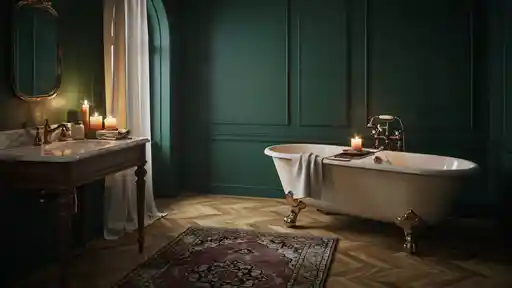
Table of Contents
- Paint the Walls a Deep Forest Green
- Add an Antique Wooden Vanity
- Install a Clawfoot Tub
- Use Aged Brass Fixtures
- Decorate with Ornate Vintage Mirrors
- Incorporate Marble Surfaces
- Choose Dark Floral Wallpaper
- Add Wall Sconces Instead of Overhead Lights
- Bring in Rich Wood Tones
- Install Black and White Checkered Flooring
- Display Vintage Art
- Introduce Candlelight
- Add Wainscoting for Character
- Decorate with Vintage Accessories
- Use Linen Curtains
- Incorporate Dark Blue Paint
- Style with Fresh Greenery
- Mix Old and New Pieces
- Final Thoughts
1. Paint the Walls a Deep Forest Green
Forest green instantly creates a rich, intimate atmosphere that feels both dramatic and relaxing. This timeless shade pairs beautifully with antique wood, aged brass fixtures, marble accents, and warm-toned tile, making it an excellent choice for a moody vintage bathroom. The deep color also gives simple architectural details more visual impact, allowing mirrors, lighting, and vintage furniture to stand out.
The beauty of dark green lies in its versatility. During the day, it can feel sophisticated and elegant as natural light moves across the walls, while at night, warm lighting can turn the room into a cozy, cocoon-like retreat. Shades with subtle gray, olive, or earthy undertones can create a softer appearance than a very bright green.
If you’re worried about making a small bathroom feel too dark, you don’t have to paint every wall. Try using forest green on the vanity wall or behind the bathtub and balance it with lighter marble, cream-colored fixtures, or warm white trim. A large vintage mirror can also reflect available light and help prevent the darker color from feeling overwhelming.
For a more authentic vintage appearance, consider pairing the green walls with traditional details such as raised-panel wainscoting, antique-style sconces, brass hardware, or framed botanical artwork. Natural materials like wood and stone can further soften the deep color and give the room a collected, lived-in feeling.
Designer Tip: Test your chosen green in the actual bathroom before committing to the entire room. Bathroom lighting can significantly change how a dark paint color appears throughout the day. Choose a shade that still feels rich and comfortable under both natural and artificial light.
Best For: Moody vintage bathrooms, traditional homes, cottage interiors, Victorian-inspired spaces, and small powder rooms
Style: Dramatic, elegant, cozy
Maintenance: Low

2. Add an Antique Wooden Vanity
Nothing defines a vintage bathroom quite like a beautifully aged wooden vanity. The natural grain, subtle imperfections, and worn finish can introduce warmth and character that are difficult to recreate with perfectly uniform modern cabinetry. A dark walnut, oak, or painted wood vanity can also provide a beautiful contrast against moody walls and lighter stone surfaces.
One of the most charming options is repurposing an old dresser or vintage cabinet as a bathroom vanity. This approach gives the room a collected, one-of-a-kind appearance instead of making it feel like everything came from the same showroom. Look for a piece with sturdy construction, useful drawer space, and proportions that work comfortably with your bathroom layout.
Pair the wooden base with a stone, marble, or durable countertop and add a traditional-style sink to complete the look. Aged brass or antique bronze hardware can reinforce the vintage character, while a modern faucet and plumbing components can provide the reliability needed for everyday use without taking away from the overall aesthetic.
Before converting an antique piece, make sure it can handle the moisture levels in your bathroom. Properly seal suitable wood surfaces, protect areas exposed to water, and ensure plumbing modifications are professionally completed when necessary. This helps preserve the furniture while making the vanity practical for long-term use.
You can also style the vanity with a vintage mirror, brass sconces, ceramic containers, and a small tray for everyday essentials. Keeping the countertop relatively uncluttered allows the character of the wood to remain the main feature.
Designer Tip: Choose a vanity with enough visual weight to balance the darker colors in a moody bathroom, but avoid an oversized piece that makes the room difficult to move through. The right proportions will make the bathroom feel intentional rather than crowded.
Best For: Vintage bathrooms, traditional homes, cottage bathrooms, Victorian-inspired interiors, and character-filled renovations
Style: Warm, authentic, timeless
Maintenance: Medium

3. Install a Clawfoot Tub
A clawfoot bathtub instantly becomes the centerpiece of a vintage bathroom. Its graceful curves, raised legs, and freestanding silhouette bring a sense of old-world elegance that works beautifully with moody colors, antique furniture, and traditional finishes. Even when the rest of the room is relatively simple, a classic clawfoot tub can give the entire space a strong vintage identity.
Positioning the tub near a window can create a bright and relaxing focal point during the day, while placing it beneath a vintage-inspired chandelier can make the bathroom feel more dramatic in the evening. Keep the area around the tub relatively open so its sculptural shape remains visible and the room doesn’t feel crowded.
The finish you choose can also change the mood. A traditional white tub creates beautiful contrast against forest green, navy, charcoal, or dark floral walls. For a more dramatic appearance, consider a tub with a darker exterior paired with classic metal feet and warm brass fixtures. Keep the surrounding materials simple so the bathtub remains the star of the room.
Comfort and practicality should also be considered before installation. Make sure the bathroom floor can safely support the tub when it is filled with water and occupied, and check that the plumbing and drainage requirements work with your existing layout. Freestanding tubs can also require more floor space than built-in models, so measure carefully before making a purchase.
Complete the look with a vintage-style floor mat, linen towels, a small wooden stool, or a simple tray for bath essentials. These details can make the tub feel inviting without overwhelming its classic design.
Designer Tip: Let the clawfoot tub be the main statement piece. Pair it with simple surrounding finishes and one or two vintage accents rather than filling the room with competing decorative elements.
Best For: Spacious bathrooms, traditional homes, vintage interiors, cottage-style spaces, and luxurious primary bathrooms
Style: Romantic, elegant, nostalgic
Maintenance: Medium

4. Use Aged Brass Fixtures
Aged brass fixtures bring warmth, character, and a subtle sense of history to a moody vintage bathroom. Unlike highly polished chrome or modern stainless steel, aged brass has a softer appearance that works beautifully with deep wall colors, antique furniture, marble, and traditional tile.
You can introduce brass in several ways, including faucets, shower fixtures, cabinet handles, towel bars, mirrors, and wall sconces. You don’t need to use brass everywhere. A few coordinated pieces can be enough to create a consistent vintage look without making the bathroom feel overly decorated.
The finish you choose also affects the overall mood. A naturally aged or antique brass finish tends to feel more authentic and understated, while brushed brass offers a cleaner interpretation of the vintage look. If you’re mixing metals, keep the combination intentional by allowing one finish to dominate and using the second as a smaller accent.
Brass looks particularly beautiful against dark forest green, navy, charcoal, and brown. It can also warm up cooler materials such as white marble or ceramic tile, creating a balanced contrast between traditional elegance and modern practicality.
Keep in mind that not every brass finish ages in the same way. Some products are designed to develop a patina, while others have a protective coating intended to maintain their original appearance. Check the manufacturer’s care instructions before using abrasive cleaners or polishing products.
Designer Tip: Repeat your brass finish in at least two or three areas of the bathroom—for example, pair a brass faucet with matching sconces and cabinet hardware. This creates visual consistency without making every element metallic.
Best For: Moody vintage bathrooms, traditional interiors, Victorian-style homes, cottage bathrooms, and old-world designs
Style: Warm, elegant, timeless
Maintenance: Low to Medium

5. Decorate with Ornate Vintage Mirrors
An ornate vintage mirror can completely transform a bathroom by adding character, texture, and a strong decorative focal point. Instead of looking like a purely functional fixture, a mirror with an intricately carved, distressed, or decorative frame can feel more like a piece of antique artwork. This makes it especially effective in a moody bathroom where every detail contributes to the overall atmosphere.
Gold, aged brass, bronze, and dark wooden frames all work beautifully with vintage-inspired interiors. A gold-framed mirror looks particularly striking against forest green, navy, charcoal, or dark floral wallpaper because the warm metallic finish creates contrast while reflecting available light.
For a small bathroom, a large mirror can also make the room feel more open. Positioning it above the vanity allows it to reflect light from nearby windows or sconces, helping prevent darker wall colors from making the space feel too enclosed. However, the mirror should still be appropriately scaled to the vanity and available wall space.
You can also use vintage mirrors to introduce personality into areas beyond the main vanity. A decorative mirror above a console, beside a clawfoot tub, or on an otherwise empty wall can create another visual layer without requiring additional furniture or accessories.
When choosing an antique or vintage mirror, inspect the frame and mounting hardware carefully, especially if the piece is genuinely old. Bathrooms have higher humidity than many other rooms, so protecting vulnerable materials and using secure mounting hardware can help preserve the mirror over time.
Designer Tip: Choose one statement mirror rather than covering the bathroom with several competing frames. Pair an ornate mirror with simple lighting and understated accessories so its craftsmanship remains the main attraction.
Best For: Moody vintage bathrooms, powder rooms, traditional interiors, Victorian-style spaces, and elegant bathroom renovations
Style: Ornate, romantic, sophisticated
Maintenance: Low to Medium

6. Incorporate Marble Surfaces
Marble and vintage design make a beautiful combination, especially in a moody bathroom where the natural stone can provide contrast against deeper colors and antique finishes. White marble countertops, vanity tops, shower details, or flooring can introduce brightness while maintaining the sophisticated character of the space.
One of marble’s most appealing features is its natural veining. Every slab has its own pattern, which adds subtle movement and character without requiring additional decoration. Soft gray veining works beautifully with charcoal and navy, while warmer veining can complement brass fixtures, dark wood, and earthy paint colors.
You don’t need to cover the entire bathroom in marble to achieve a luxurious effect. A marble vanity countertop or backsplash can provide enough visual impact while keeping the rest of the materials more understated. Pairing marble with aged brass, antique wood, and warm lighting can create a particularly rich vintage atmosphere.
For flooring, consider the scale and pattern of the tile. Smaller marble tiles or classic layouts can reinforce the traditional character of the room, while larger slabs create a cleaner, more contemporary interpretation of vintage style. A darker grout can also emphasize traditional patterns, although the final choice should suit the overall color palette.
Marble does require thoughtful maintenance because it is a natural stone that can be sensitive to staining and acidic substances. Follow the care recommendations for the specific stone and finish you choose, and consider professional guidance for sealing and long-term maintenance.
Designer Tip: Use marble as a statement material rather than covering every surface. Combining one beautiful marble feature with dark paint, aged brass, and warm wood often creates a more balanced and timeless result.
Best For: Luxury bathrooms, vintage interiors, traditional homes, moody spaces, Victorian-inspired designs, and elegant renovations
Style: Refined, timeless, luxurious
Maintenance: Medium to High

7. Choose Dark Floral Wallpaper
Dark floral wallpaper is an easy way to introduce romance, pattern, and old-world character into a moody vintage bathroom. Deep backgrounds paired with botanical flowers, vines, or traditional motifs can make the walls feel more decorative while complementing antique furniture and warm metal finishes.
A wallpapered accent wall behind the vanity or bathtub can turn a simple bathroom into a sophisticated focal point without requiring the entire room to be covered. Look for patterns that include colors already present in the space, such as forest green, burgundy, muted gold, cream, navy, or brown. Repeating these tones throughout the room helps the wallpaper feel connected to the rest of the design.
For a smaller bathroom, a dramatic floral pattern can actually add personality without requiring many additional accessories. Keep the surrounding furniture and decor relatively simple so the wallpaper has room to stand out. An ornate mirror, brass sconces, and a wooden vanity can provide enough contrast to complete the vintage look.
Because bathrooms experience moisture and humidity, choose a wallpaper product specifically suitable for the conditions of the room and follow the manufacturer’s installation recommendations. Good ventilation is also important for helping manage moisture and protecting the wall finish over time.
If you’re hesitant about committing to a bold pattern, start with a single feature wall or use the wallpaper above traditional wainscoting. This creates a layered appearance while giving you more control over how much pattern appears in the room.
Designer Tip: Pair dark floral wallpaper with simple, warm-toned fixtures rather than adding several competing patterns. Let the botanical design become the main statement and use brass, wood, and marble to reinforce its vintage character.
Best For: Powder rooms, vintage bathrooms, Victorian-inspired interiors, cottage homes, traditional spaces, and dramatic bathroom makeovers
Style: Romantic, dramatic, elegant
Maintenance: Medium

8. Add Wall Sconces Instead of Overhead Lights
Lighting plays a huge role in creating a moody vintage bathroom. Instead of relying entirely on a bright overhead fixture, use wall sconces to introduce softer layers of light around the vanity, mirror, or other important areas. This creates a warmer atmosphere while giving traditional architectural details more visual impact.
Brass, aged bronze, antique-style metal, and glass sconces work particularly well with vintage interiors. Fluted, frosted, or opal glass shades can soften the light and add another layer of classic character. Positioning matching sconces on either side of a mirror can also create a balanced, symmetrical look that suits traditional bathroom design.
Layering is important in a moody bathroom. Wall sconces can provide task lighting around the vanity, while a ceiling fixture or recessed lighting can provide general illumination. If you have a bathtub or separate relaxation area, a small decorative fixture can add another layer without making the room excessively bright.
Warm-toned bulbs can help create the cozy atmosphere associated with vintage interiors, but make sure the fixtures and bulbs you choose are appropriate for their specific bathroom location. Electrical installations should also follow local requirements and be completed by a qualified professional when necessary, particularly in areas exposed to moisture.
Don’t be afraid to make the lighting fixture itself part of the decor. An elegant pair of brass sconces can function almost like jewelry against a dark green or navy wall, especially when placed beside an ornate vintage mirror.
Designer Tip: Use matching sconces on both sides of the vanity mirror when possible. This provides balanced illumination and creates a polished, symmetrical appearance that complements the timeless character of a vintage bathroom.
Best For: Moody vintage bathrooms, traditional interiors, powder rooms, Victorian-style spaces, and luxury bathroom designs
Style: Warm, elegant, atmospheric
Maintenance: Low

Rich wood tones can instantly make a moody vintage bathroom feel warmer, more grounded, and thoughtfully collected. Walnut, mahogany, oak, and other natural wood finishes introduce organic texture that balances darker wall colors, cool marble, and metallic fixtures. The natural grain also adds visual interest without relying on bold patterns.
A wooden vanity is an obvious choice, but you don’t need a large piece of furniture to bring this material into the room. Floating shelves, a small stool, framed artwork, a storage cabinet, or even a simple wooden tray can introduce enough warmth to soften the overall design.
Dark wood works especially well with deep forest green, navy, charcoal, and burgundy. Pair it with aged brass fixtures and warm lighting for a traditional look, or combine it with lighter marble and cream-colored details if you want the room to feel more balanced and spacious.
Because bathrooms can be humid, choose wood products and finishes that are appropriate for the environment. Avoid leaving untreated wood in areas where it will regularly come into direct contact with water. Proper sealing and good ventilation can help protect suitable wood surfaces and maintain their appearance.
You can also create a more authentic vintage feeling by mixing different wood tones rather than making every wooden element identical. A slightly weathered cabinet paired with a darker wooden frame can make the room feel collected over time rather than overly coordinated.
Designer Tip: Use rich wood as a warm counterpoint to darker paint and stone. If the walls and flooring are already dramatic, introduce wood through one or two substantial pieces instead of adding many small wooden accessories.
Best For: Vintage bathrooms, traditional homes, cottage interiors, moody spaces, rustic-vintage designs, and old-world bathroom renovations
Style: Warm, natural, collected
Maintenance: Medium

10. Install Black and White Checkered Flooring
Few flooring choices capture the character of a vintage bathroom quite like classic black and white checkered tile. The bold geometric pattern has a timeless quality that works beautifully with antique furniture, clawfoot tubs, brass fixtures, and dramatic wall colors. It can make a simple bathroom feel more architectural and intentionally designed.
The contrast between black and white also provides a useful foundation for a moody color palette. Pair the flooring with forest green, navy, charcoal, or dark floral walls to create a dramatic atmosphere, or keep the walls lighter if you want the floor to become the main statement feature.
The size and orientation of the tiles can change the overall effect. Smaller squares tend to feel more traditional and detailed, while larger tiles can create a cleaner interpretation of the classic look. A straightforward grid layout emphasizes the timeless character, while diagonal placement can make the floor feel more dynamic.
Because checkered flooring already creates a strong visual pattern, keep some of the surrounding elements relatively simple. A solid-color vanity, understated walls, and a few carefully selected vintage accessories can prevent the bathroom from feeling visually busy.
When choosing bathroom flooring, consider slip resistance, water exposure, grout maintenance, and the specific requirements of the material. A beautiful floor also needs to be practical enough for everyday use.
Designer Tip: Let the black-and-white floor provide the contrast and use one deep accent color—such as forest green or navy—for the walls. This creates a dramatic vintage look without introducing too many competing patterns.
Best For: Vintage bathrooms, Victorian-style homes, traditional interiors, powder rooms, cottage bathrooms, and classic renovations
Style: Classic, bold, timeless
Maintenance: Medium

11. Display Vintage Art
Vintage artwork is a simple way to give a bathroom more personality and create the feeling that the space has been thoughtfully collected over time. Old paintings, botanical illustrations, antique landscapes, framed sketches, and vintage-inspired prints can add color and character without requiring a major renovation.
A small gallery wall can work particularly well above a vanity, beside a bathtub, or on an otherwise empty wall. Mix different frame styles and sizes for a collected appearance, but keep a connection between the pieces through similar colors, subject matter, or finishes. Dark wooden frames, aged gold, brass, and distressed finishes naturally complement a moody vintage palette.
Botanical prints are especially effective because their muted greens, browns, and cream tones work beautifully with forest green, navy, and other dramatic bathroom colors. If you prefer something more traditional, consider landscapes, architectural sketches, or classical artwork that reinforces the old-world character of the room.
When displaying artwork in a bathroom, think carefully about moisture and ventilation. Avoid placing valuable or delicate originals in areas exposed directly to steam or splashing water. Reproductions, properly protected prints, or artwork positioned away from the wettest areas can provide a similar decorative effect with less concern about damage.
You can also use one oversized piece instead of creating a gallery wall. A large antique-style painting above a freestanding tub can become a dramatic focal point, particularly when paired with warm sconces and aged brass fixtures.
Designer Tip: Choose artwork that repeats one or two colors already present in the bathroom. This small detail helps the pieces feel intentionally connected to the room rather than randomly added.
Best For: Moody vintage bathrooms, traditional interiors, Victorian-style spaces, powder rooms, cottage bathrooms, and eclectic designs
Style: Collected, artistic, timeless
Maintenance: Low

12. Introduce Candlelight
Nothing creates a warm, intimate atmosphere quite like candlelight. The gentle glow of candles can soften deep wall colors, highlight brass fixtures, and make a moody vintage bathroom feel especially relaxing in the evening. It is also an easy way to add ambiance without changing the permanent elements of the room.
Place candles on a sturdy tray beside the bathtub, on a suitable vanity surface, or on shelves away from water and fabrics. Grouping candles at different heights can create a layered glow, while simple glass holders or vintage-style brass containers can reinforce the old-world character of the bathroom.
For a more refined look, choose candles in neutral shades such as cream, ivory, or soft beige. Unscented candles can be a good choice if you want to avoid strong fragrances, while subtle scents such as lavender or vanilla can complement a relaxing bath when used appropriately.
Safety should always come first when using real flames in a bathroom. Keep candles well away from towels, curtains, paper, toiletries, and other flammable materials, and never leave a burning candle unattended. If the bathroom is small or you simply prefer a lower-maintenance option, flameless LED candles can create a similar visual effect without an open flame.
Candlelight works particularly well alongside warm wall sconces or a dimmable ceiling fixture. Instead of making the entire bathroom bright, use multiple gentle light sources to create depth and allow the room to transition naturally from daytime functionality to evening relaxation.
Designer Tip: Use candlelight as an accent rather than the bathroom’s main source of illumination. A few thoughtfully positioned candles combined with warm ambient lighting will create a richer and more comfortable atmosphere.
Best For: Moody vintage bathrooms, relaxing primary bathrooms, clawfoot tub areas, romantic interiors, and spa-inspired spaces
Style: Warm, intimate, luxurious
Maintenance: Low

13. Add Wainscoting for Character
Traditional wainscoting can instantly give a bathroom more architectural depth and a sense of old-world craftsmanship. The raised panels, clean molding lines, or beadboard details create visual structure while protecting the lower portion of the walls from everyday wear. This makes wainscoting both a decorative and practical addition to a vintage-inspired bathroom.
Painting the wainscoting in a deep shade such as forest green, navy, charcoal, or warm brown can enhance the moody atmosphere. For a lighter vintage look, consider cream, warm white, or soft gray below a darker wallpaper or painted upper wall. The contrast creates a layered appearance that feels intentional without requiring excessive decoration.
Pairing wainscoting with wallpaper above is another beautiful option. Dark floral prints, traditional botanical patterns, and subtle vintage motifs can complement the architectural detail while adding personality. If the room already has several strong features, a simple painted wall above the wainscoting may provide a more balanced result.
The height of the wainscoting can also influence the proportions of the room. Traditional installations often cover part of the lower wall, but the exact height should be chosen based on the bathroom’s ceiling height, fixtures, and overall scale. Consistent trim and molding can help the entire treatment look professionally finished.
Because bathrooms experience moisture and humidity, choose appropriate materials and finishes for the space. Proper ventilation and careful sealing around areas exposed to water can help protect the installation and keep it looking beautiful over time.
Designer Tip: Use wainscoting to create a visual foundation for the room. Pair it with one dramatic wall treatment above—such as dark floral wallpaper or a rich paint color—and keep the remaining decor relatively simple.
Best For: Traditional bathrooms, Victorian interiors, cottage homes, powder rooms, vintage renovations, and moody bathroom designs
Style: Architectural, elegant, timeless
Maintenance: Low to Medium

14. Decorate with Vintage Accessories
Small decorative details can make a surprisingly big difference in a moody vintage bathroom. Old perfume bottles, antique trays, brass containers, ceramic dishes, vintage clocks, and decorative glass jars can introduce personality without requiring a major renovation. These pieces help create the feeling that the bathroom has been collected and styled over time rather than purchased as one matching set.
Place a vintage tray on the vanity to organize everyday items while adding an attractive decorative layer. Small glass bottles can hold cotton pads or other bathroom essentials, while an antique brass container can provide a practical place for smaller items. The goal is to combine useful objects with decorative pieces so the room remains beautiful and functional.
Vintage accessories also give you an opportunity to introduce subtle colors and textures. A muted ceramic vase, dark wooden box, linen hand towel, or aged metal container can complement deep wall colors while adding visual warmth. Choose finishes that connect with existing elements such as brass fixtures, wooden furniture, marble, or vintage artwork.
Be selective rather than filling every available surface. Too many accessories can make a small bathroom feel cluttered and can take away from the elegant simplicity of the vintage style. A few meaningful pieces with different heights and textures will usually create a more sophisticated result.
If you’re using genuine antiques, consider their condition and suitability for a humid bathroom. Keep delicate, valuable, or moisture-sensitive items away from direct splashes and areas where condensation is common. Reproduction pieces can also provide the same visual character when authentic antiques aren’t practical.
Designer Tip: Style accessories in small groups of two or three instead of scattering individual objects throughout the room. Repeating brass, glass, wood, or ceramic finishes will make the bathroom feel cohesive and thoughtfully curated.
Best For: Vintage bathrooms, powder rooms, traditional interiors, Victorian-inspired spaces, cottage homes, and small bathroom updates
Style: Collected, personal, charming
Maintenance: Low

15. Use Linen Curtains
Soft linen curtains can add warmth, texture, and an effortless sense of elegance to a moody vintage bathroom. Their slightly relaxed texture balances deep wall colors and harder materials such as marble, tile, and metal. The result is a space that feels softer and more comfortable without losing its sophisticated character.
Natural linen is especially beautiful when sunlight passes through it. The fabric gently diffuses bright daylight, creating a softer glow and subtle shadows throughout the room. Choose warm neutral shades such as ivory, oatmeal, beige, or natural flax to complement dark green, navy, brown, and other vintage-inspired colors.
Curtains can also provide privacy without making the bathroom feel completely closed off. Use them near a freestanding bathtub, bathroom window, or other suitable area where you want additional softness and visual separation. Floor-length curtains can create a more dramatic appearance in larger bathrooms, while shorter panels may work better in compact spaces.
Because bathrooms are exposed to moisture, ventilation is important when using fabric near windows or bathing areas. Choose washable or moisture-appropriate textiles and avoid allowing curtains to remain damp for extended periods. Proper spacing from wet areas can also help protect the fabric and prevent unnecessary wear.
For a more traditional look, pair linen curtains with an aged brass or dark metal curtain rod. You can also layer them with simple blinds or shades when you need greater control over privacy and natural light.
Designer Tip: Let the curtains remain slightly understated. Neutral linen panels can soften a dramatic bathroom while allowing statement features such as an antique vanity, clawfoot tub, or vintage mirror to remain the focus.
Best For: Vintage bathrooms, traditional homes, cottage interiors, clawfoot tub areas, and moody bathroom designs
Style: Soft, relaxed, elegant
Maintenance: Medium

16. Incorporate Dark Blue Paint
Navy blue is another timeless color choice for creating a moody vintage bathroom. It feels rich and sophisticated while often appearing softer and more approachable than true black. Deep blue walls can create a cozy backdrop for antique furniture, traditional tile, marble surfaces, and warm metallic finishes.
One of the biggest advantages of navy is how easily it works with other vintage materials. Aged brass fixtures stand out beautifully against deep blue, while white marble and classic ceramic sinks provide a crisp contrast. Natural wood can add warmth and prevent the darker palette from feeling too cold or formal.
You can use navy throughout the bathroom for a dramatic, enveloping effect or introduce it on a single accent wall behind the vanity or bathtub. In smaller bathrooms, combining dark blue with lighter trim, reflective mirrors, and warm lighting can help maintain a sense of openness while still delivering the moody character you want.
The exact shade matters because lighting can significantly change how navy appears. Blue paints with subtle gray or green undertones can create a more sophisticated vintage feeling, while brighter blues may give the room a fresher, more traditional appearance. Test samples under both daylight and artificial lighting before committing to the color.
For additional depth, consider pairing navy walls with patterned wallpaper, traditional wainscoting, dark wood, or vintage artwork. Keeping the number of accent colors limited will help the room feel cohesive rather than overly busy.
Designer Tip: Combine navy with warm materials rather than cool finishes. Aged brass, natural wood, cream textiles, and warm white lighting can soften the blue and create the cozy atmosphere associated with a classic vintage bathroom.
Best For: Moody vintage bathrooms, traditional homes, coastal-vintage interiors, powder rooms, Victorian-inspired spaces, and elegant renovations
Style: Rich, sophisticated, intimate
Maintenance: Low

17. Style with Fresh Greenery
Fresh greenery can bring life and softness to a moody vintage bathroom, especially when the room features dark walls, aged metal, and traditional materials. The natural green tones create a beautiful connection with forest green paint, dark wood, marble, and brass while adding a fresh visual contrast to the heavier elements.
Ferns, eucalyptus, and other humidity-tolerant plants can work well in suitable bathroom conditions, but the best choice depends on the amount of natural light, ventilation, and moisture available. If your bathroom has limited sunlight, consider plants that tolerate lower-light conditions rather than choosing a variety simply because it looks good in photographs.
You don’t need to turn the bathroom into a jungle. A single potted fern beside the vanity, a small plant on a shelf, or a simple vase of greenery near the bathtub can be enough to soften the space. For a more traditional appearance, choose ceramic, terracotta, stone, or aged-metal planters that complement the existing vintage finishes.
Fresh eucalyptus can also be used as a simple decorative element, adding muted green tones and natural texture. However, keep any plant or greenery away from areas where it could interfere with electrical fixtures, walkways, or frequently splashed surfaces.
If maintaining live plants isn’t practical, high-quality faux greenery can provide a similar decorative effect with very little maintenance. Choose realistic textures and restrained arrangements so the result still feels natural rather than overly artificial.
Designer Tip: Use greenery to soften the hardest visual elements in the bathroom. A leafy plant beside a dark wooden vanity or a simple branch arrangement near a marble surface can create just enough contrast without distracting from the vintage design.
Best For: Moody vintage bathrooms, traditional interiors, cottage homes, nature-inspired spaces, powder rooms, and bathrooms with natural light
Style: Fresh, natural, relaxed
Maintenance: Low to Medium

18. Mix Old and New Pieces
The most successful vintage bathrooms don’t necessarily look like they belong entirely to another era. Instead, they combine antique-inspired details with modern conveniences to create a space that feels timeless, comfortable, and practical. Mixing old and new also allows you to enjoy the character of vintage design without sacrificing the functionality expected from a modern bathroom.
An antique wooden vanity paired with a contemporary sink is a great example. You can also combine a classic clawfoot tub with modern plumbing, traditional wall sconces with updated lighting technology, or an ornate vintage mirror with a simple modern countertop. These combinations create contrast while keeping the overall design cohesive.
The key is to establish a common visual connection between the different pieces. Warm brass hardware, natural wood, marble, traditional tile, or a consistent color palette can help modern and vintage elements work together. For example, a sleek modern fixture will feel less out of place when its finish complements the aged brass used elsewhere in the bathroom.
Avoid making every element look equally old. Too many antique details can make the bathroom feel like a themed room rather than a comfortable home. Instead, choose a few distinctive vintage pieces and let modern surfaces and fixtures provide a clean foundation around them.
This approach is also practical when renovating on a budget. You can invest in important modern features such as plumbing, lighting, ventilation, and durable surfaces while adding character through secondhand furniture, vintage-style mirrors, artwork, and accessories.
Designer Tip: Choose two or three vintage elements to act as the room’s personality pieces, then surround them with simple modern essentials. This creates the collected, sophisticated appearance that makes vintage bathrooms feel authentic rather than overly themed.
Best For: Bathroom renovations, modern homes with vintage character, traditional interiors, eclectic spaces, and homeowners who want practical vintage style
Style: Collected, balanced, timeless
Maintenance: Medium

Final Thoughts
Moody vintage bathrooms prove that dark colors and antique details can feel incredibly warm, inviting, and sophisticated. The secret is not simply choosing darker paint or filling the room with old-fashioned accessories. Instead, the most successful spaces balance dramatic colors with warm lighting, natural materials, practical fixtures, and carefully selected vintage details.
You don’t need to complete a major renovation to create this atmosphere. Start with one feature that makes a noticeable difference, such as a forest green or navy wall, an antique-style mirror, aged brass hardware, vintage artwork, or a wooden vanity. From there, layer in textures and materials that complement the existing design rather than trying to change everything at once.
When planning your bathroom, remember that beauty should work alongside everyday function. Choose moisture-appropriate materials, provide good ventilation, and make sure lighting, plumbing, storage, and fixtures are practical for your needs. These functional details will help your bathroom remain comfortable while the decorative elements provide the vintage character you love.
The most memorable vintage bathrooms also have a sense of personality. Mixing old and new pieces, displaying meaningful artwork, adding greenery, or incorporating a beautifully aged piece of furniture can make the room feel collected rather than overly designed. Small imperfections and unique details can actually make the space feel more authentic.
Whether you adopt one idea or embrace the entire aesthetic, these moody vintage bathroom ideas can help you create a space that feels timeless, cozy, and deeply personal. Start with the colors and materials you naturally love, build around one or two statement pieces, and let the room develop into a comfortable retreat that remains beautiful for years to come.
Frequently Asked Questions About Moody Vintage Bathrooms
1. How do you make a vintage bathroom look moody without making it feel too dark?
Use dark colors as a backdrop and balance them with lighter or reflective elements. Forest green, navy, or charcoal walls can be paired with white marble, cream textiles, mirrors, warm lighting, and aged brass fixtures. Good natural or layered artificial lighting is especially important in smaller bathrooms.
2. What colors work best for a moody vintage bathroom?
Deep forest green, navy blue, charcoal, burgundy, warm brown, and muted black are excellent choices. These shades work particularly well with vintage materials such as aged brass, dark wood, marble, and traditional tile. If the bathroom is small, consider using a dark color on one feature wall and lighter finishes elsewhere.
3. How can I create a vintage bathroom on a budget?
You don’t need to replace everything to achieve the look. Start with affordable changes such as vintage-style mirrors, brass hardware, framed artwork, linen curtains, traditional lighting, or a new wall color. You can also repurpose an old wooden dresser as a vanity if it can be properly adapted and protected for bathroom use.
4. What materials work best with moody vintage bathroom designs?
Natural and traditional materials tend to work particularly well. Marble, natural wood, brass, ceramic tile, linen, glass, and stone can all add warmth and character. Combining several textures prevents a dark bathroom from feeling flat and creates the layered appearance associated with classic vintage interiors.
5. How do you mix modern features with vintage bathroom decor?
Choose a few vintage elements as the main character pieces and combine them with modern essentials. For example, an antique wooden vanity can work with a modern sink, or a clawfoot tub can be paired with updated plumbing and contemporary bathroom technology. Keeping the finishes and color palette consistent helps old and new pieces feel intentional rather than mismatched.
You May Also Like
- 21 Japandi Living Room Ideas for a Calm and Stylish Home
- 20 Scandinavian Living Room Ideas for a Modern Cozy Home
- 21 Double Height Living Room Ideas to Make Your Home Feel Grand and Bright
- 20 Rustic Bathroom Ideas That Never Go Out of Style
- 23 Small Balcony Ideas That Add Charm, Comfort, and Functionality
- 18 Cozy Home Office Ideas to Create a Warm and Productive Workspace

