
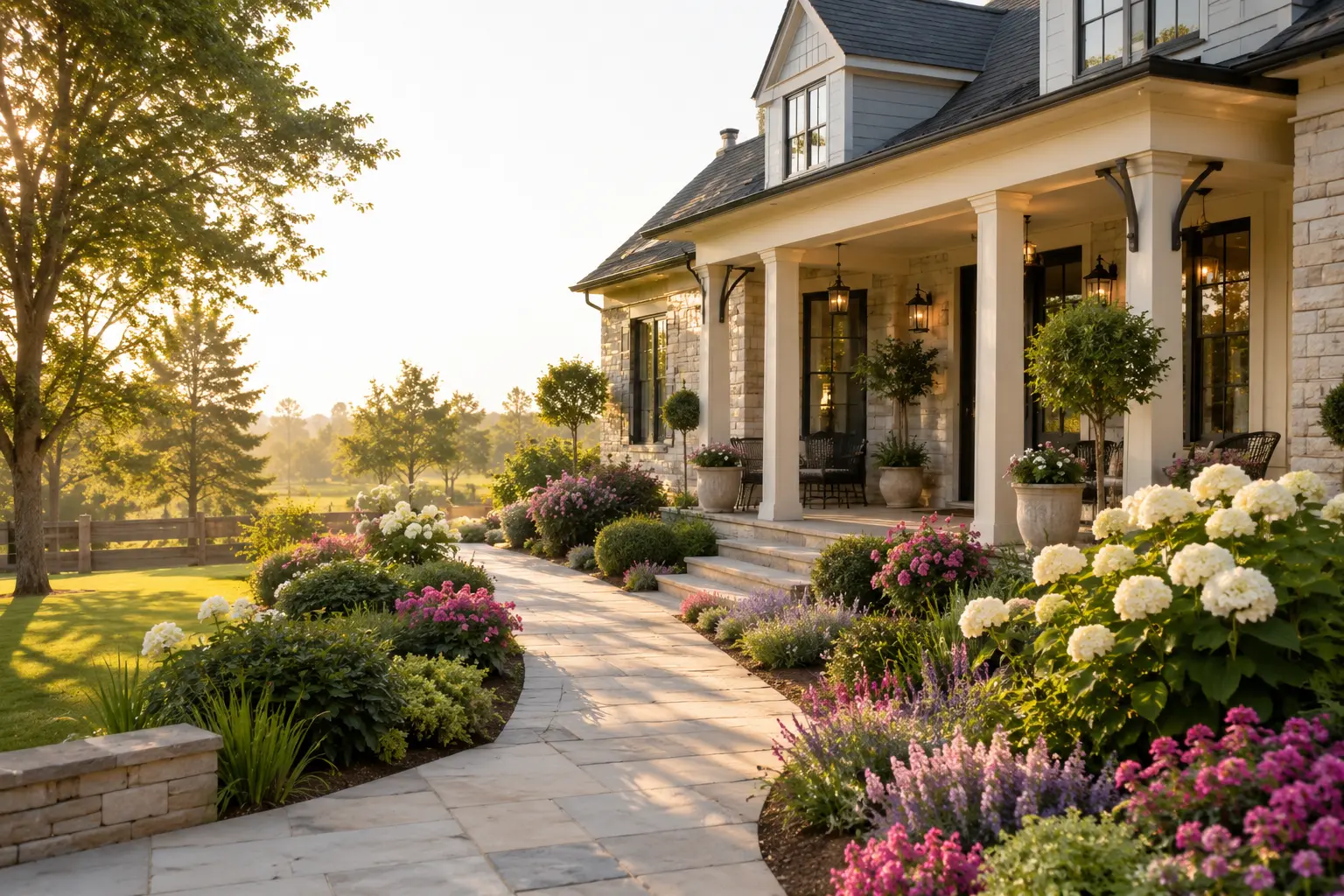
The best front yard decor ideas combine plants, planters, pathways, outdoor lighting, and decorative details to create a welcoming entrance and boost curb appeal. Layered flower beds, oversized planters, warm lighting, decorative borders, garden arbors, and charming seating areas can all transform a plain front yard without requiring an expensive makeover.
The right approach depends on your home’s style and the space you have. Clean lines and structured planting work beautifully with modern homes, while cottage gardens, arbors, and overflowing flower beds create a softer traditional look. Farmhouse homes can benefit from natural wood and simple greenery, while classic properties often look best with symmetrical landscaping and timeless materials.
Even a small front yard can feel polished when you create a clear path to the entrance, add height with plants or planters, and stick to a consistent color palette. Larger yards give you more room to create separate planting, seating, and pathway areas.
In this guide, you’ll discover 15 gorgeous front yard decor design ideas for different home styles and budgets. From statement walkways and layered flower beds to elegant planters, window boxes, garden arbors, and outdoor lighting, these ideas will help you create a front yard that feels beautiful, intentional, and welcoming.
1. Create a Statement Walkway
A beautiful walkway does more than lead visitors to your front door—it creates a visual connection between the street and your home. When thoughtfully designed, it can become one of the most noticeable features of your front yard while making the entire landscape feel more organized and intentional.
Natural stone pavers, brick, flagstone, or decorative concrete can all create attractive pathways. Choose a material that complements your home’s exterior rather than competing with it. For example, warm brick works beautifully with traditional and farmhouse homes, while large-format concrete or clean stone slabs can give a modern property a more streamlined appearance.
Consider adding a gentle curve if your yard has enough space. Curved pathways can create a softer, more inviting appearance, while straight paths tend to look crisp and structured. Keep the walkway wide enough for comfortable foot traffic and avoid adding too many decorative elements that could make the entrance feel crowded.
You can enhance the edges with low-growing flowers, ornamental grasses, small shrubs, or neatly placed solar path lights. Repeating the same plants or materials along both sides creates visual rhythm and makes the walkway feel professionally designed.
For a finishing touch, keep the pathway clean and well maintained throughout the year. Remove weeds, sweep away debris, and replace damaged pavers when necessary. A statement walkway doesn’t need to be elaborate—the right materials, proportions, planting, and lighting can transform an ordinary entrance into a welcoming focal point.

2. Add Layered Flower Beds
Layered flower beds are an easy way to give your front yard more color, depth, and visual interest. Instead of planting everything at the same height, arrange taller shrubs and plants toward the back, medium-height flowers in the middle, and low-growing plants along the front edge. This simple arrangement creates a fuller landscape while keeping each plant visible from the street.
Choose flowers and foliage that complement the color of your home’s exterior. Soft whites, blush tones, and greens can create an elegant look, while deeper reds, purples, and yellows add a more vibrant feel. If your home already has a strong exterior color, a more restrained planting palette can help the overall design feel balanced.
For year-round interest, combine plants with different blooming seasons rather than relying on one type of flower. Evergreen shrubs can provide structure during colder months, while perennials and seasonal flowers add changing color throughout spring and summer. Ornamental grasses can also add movement and texture without requiring constant attention.
The shape of the flower bed matters, too. Curved borders can soften a boxy home and create a relaxed garden feel, while straight, defined edges work well with modern architecture. Use stone, brick, metal edging, or another suitable border material to keep the planting area visually clean.
Finally, leave enough space between plants for healthy growth and maintenance. A flower bed may look slightly sparse when first planted, but allowing room for plants to mature prevents overcrowding later. With thoughtful layering and a consistent color scheme, your front yard can feel lush, welcoming, and professionally landscaped.

3.Style Your Porch With Oversized Planters
Oversized planters can instantly make a front porch or entrance feel more polished, substantial, and welcoming. Because they add height and visual weight near the front door, they can help frame the entrance and create a stronger connection between your home and the surrounding landscape.
For a classic look, place matching planters on both sides of the front door. Symmetry works especially well around traditional and formal entrances, while slightly different planters can create a more relaxed appearance for cottage or farmhouse homes. If your entrance is narrow, choose tall, streamlined containers rather than very wide ones to avoid making the walkway feel cramped.
The plants you choose can change the entire character of the display. Seasonal flowers add color and energy, evergreen shrubs provide year-round structure, and small ornamental trees can create a more sophisticated focal point. For a simple modern look, consider using one type of plant in each container rather than mixing several varieties.
Choose planters that complement your home’s exterior materials and colors. Matte black, stone, terracotta, concrete, and natural-finish containers can each create a different effect. You can also repeat the same material elsewhere in the yard to make the landscaping feel more cohesive.
Before planting, make sure the containers have adequate drainage and are suitable for the plants and local growing conditions. Large planters can become extremely heavy, so position them carefully before filling them. With the right size, placement, and greenery, oversized planters can turn an ordinary entrance into an elegant front yard focal point.

4. Install Warm Outdoor Lighting
Outdoor lighting can completely change the appearance of your front yard after sunset. It highlights architectural details, draws attention to landscaping, and makes the path to your front door easier to see. Even a simple lighting plan can make an ordinary yard feel more welcoming and thoughtfully designed.
Start by identifying the features you want to highlight. Path lights work well along walkways and garden borders, while uplights can emphasize mature trees, textured walls, columns, or architectural details. Decorative lanterns near the front door can add a softer focal point and make the entrance feel especially inviting.
For a cozy atmosphere, choose warm-toned lighting rather than harsh, cool-white illumination. Soft warm light works particularly well with natural stone, brick, wood, greenery, and neutral exterior colors. Instead of placing bright lights everywhere, use several smaller fixtures to create layers of light and shadow.
Avoid aiming lights directly toward windows or at eye level, as excessive glare can make the space uncomfortable. Concealing fixtures behind plants or positioning them at ground level can create a more subtle effect while allowing the landscape itself to remain the focus.
Solar path lights are an easy option for homeowners who want a simple installation, while low-voltage landscape lighting can provide more consistent illumination. Whichever option you choose, make sure outdoor electrical equipment is designed for exterior use and installed according to the manufacturer’s instructions.
A well-planned lighting scheme should enhance your front yard without overpowering it. By combining pathway lighting, subtle landscape illumination, and a warm glow around the entrance, you can create a front yard that looks beautiful and welcoming long after the sun goes down.

5.Incorporate a Charming Garden Arbor
A garden arbor can turn an ordinary front yard into a more inviting and memorable outdoor space. Positioned along a walkway, near a garden entrance, or as a transition between different planting areas, an arbor creates a natural focal point while adding height and architectural interest to the landscape.
For a classic cottage look, cover the arbor with climbing roses, jasmine, clematis, or other suitable flowering vines. Their foliage and blooms soften the structure and create a romantic garden feel. If you prefer a cleaner appearance, leave the arbor partially open and allow the shape of the structure itself to become the main feature.
The material you choose should complement your home’s exterior. Natural wood works beautifully with farmhouse and traditional homes, while painted finishes can create a more decorative cottage appearance. For contemporary properties, a simple metal or dark-framed arbor with straight lines can provide a striking contrast against soft greenery.
Placement is just as important as the arbor itself. Position it where it naturally guides the eye toward an important feature, such as the front entrance, garden path, or a mature tree. Avoid placing it where it blocks the doorway, narrows a frequently used walkway, or interferes with access to the home.
If you plan to grow vines over the structure, choose plants suited to your climate and available sunlight. Provide proper support for climbing plants and maintain them regularly so they don’t become overgrown or interfere with pathways.
Whether you choose a romantic flowering arbor or a minimalist architectural design, this simple feature can add depth, personality, and a strong focal point to your front yard.

6. Decorate With Window Boxes
Window boxes are a simple way to bring flowers and greenery closer to your home’s architecture while adding instant curb appeal. Positioned beneath front-facing windows, they create another layer of visual interest and help connect the house itself with the landscaping below.
Choose plants based on the amount of sunlight each window receives. Cascading flowers can create a soft, romantic appearance, while herbs and compact greenery offer a more natural, relaxed look. Seasonal flowers are also useful if you enjoy refreshing your front yard decor throughout the year.
The container material can influence the overall style. Wooden window boxes complement farmhouse, cottage, and traditional homes, while metal, composite, or clean-lined containers can work beautifully with modern exteriors. Matching the finish to existing details such as shutters, railings, or the front door can make the design feel more cohesive.
For a fuller display, combine plants with different heights and growth patterns. Place taller plants toward the back, trailing varieties near the front edge, and smaller flowers between them. Just avoid overcrowding the box, as plants need enough space and airflow to grow properly.
Installation and maintenance are equally important. Secure each window box properly and make sure it has drainage holes to prevent excess water from damaging plants or the structure beneath the window. Use a lightweight, well-draining potting mix and water according to the needs of your chosen plants.
With the right plants, proportions, and materials, window boxes can add color and personality to your exterior without requiring a major landscaping project. They’re especially effective when combined with coordinated planters and flower beds throughout the front yard.

7. Create a Cozy Seating Area
A small seating area can turn an overlooked corner of your front yard into a welcoming place to relax, enjoy your morning coffee, or chat with neighbors. It also gives the landscape a more lived-in feeling, making your home’s exterior feel warm and inviting rather than purely decorative.
Start with comfortable, weather-resistant furniture that fits the scale of your yard. A pair of lounge chairs and a small side table works well for compact spaces, while a bench or small outdoor sofa can create a more social setup in a larger front yard. Choose furniture materials and finishes that complement your home’s exterior for a cohesive appearance.
Comfortable cushions can introduce color and texture without requiring a permanent change to the landscape. Neutral cushions work well with colorful flowers, while subtle patterns can add personality to a more minimalist yard. For added warmth, place a small outdoor rug beneath the seating area if the space is protected from excessive moisture.
Complete the setup with a few carefully chosen accessories. Lanterns, potted plants, a small table, or a decorative planter can make the seating area feel intentional without creating unnecessary clutter. Keep the arrangement open enough that visitors can still move comfortably around the yard and reach the entrance.
Placement matters, especially in a front yard. Position the seating where it feels connected to the home while still allowing enough privacy for comfortable use. A porch, covered entrance, or landscaped corner can provide a natural sense of separation from the street.
For larger yards, surround the seating area with low shrubs, ornamental grasses, or flower beds to create a subtle sense of enclosure. With comfortable furniture, thoughtful placement, and a few decorative touches, even a small seating area can become one of the most inviting features of your front yard.

8. Use Decorative Garden Borders
Decorative garden borders are a simple landscaping detail that can make your front yard look more organized and professionally finished. Clearly defined edges separate flower beds, pathways, and lawn areas while giving the entire landscape a stronger sense of structure.
There are many materials to choose from depending on your home’s style. Natural stone creates a timeless, organic appearance, while brick edging works beautifully with traditional and farmhouse landscapes. Metal edging offers a slimmer, cleaner profile that can complement modern front yard designs. For a softer cottage look, natural rocks or low-growing plants can also create an attractive boundary.
Beyond appearance, garden borders have a practical purpose. They help keep mulch, soil, and decorative gravel contained while making it easier to maintain a clean separation between lawns and planting areas. A well-defined edge can also reduce the amount of grass that spreads into flower beds, making routine yard maintenance easier.
When choosing a border, consider the shape of your landscape. Straight edges create a structured, contemporary appearance, while gently curved borders can make the yard feel more relaxed and natural. Keep the lines consistent throughout the property so the different landscaping areas feel connected.
The border doesn’t need to be tall or overly decorative to make an impact. In many front yards, a low, clean edge is enough to define the space without competing with flowers, shrubs, or architectural features. Choose a material that complements your walkway, exterior finishes, or existing landscaping for a cohesive result.
With thoughtful placement and the right material, decorative garden borders can add definition, curb appeal, and a polished finishing touch to almost any front yard.

9. Add a Welcoming Front Door Focal Point
The front door should feel like the natural destination of your landscaping. Creating a strong focal point around the entrance can make the entire front yard feel more intentional while giving guests a warm welcome as they approach the home.
Start by framing the doorway with complementary plants or containers. Tall planters, symmetrical shrubs, flowering plants, or small ornamental trees can draw attention toward the entrance without making the area feel crowded. If your home has a covered porch, a decorative bench or simple lanterns can add another layer of visual interest.
Your front door color can also become part of the design. A deep green, navy blue, charcoal, natural wood, or muted red door can create a striking focal point against a neutral exterior. Keep surrounding landscaping relatively simple so the entrance remains the visual centerpiece.
A seasonal wreath, simple door mat, or attractive house numbers can provide smaller decorative details. The goal is not to fill every available space but to create a balanced entrance that feels welcoming and easy to navigate.
Keep the area around the door clean and well maintained. Trim plants that block the walkway, remove dead flowers, and make sure lighting provides enough visibility after dark. These small details can have a surprisingly large impact on curb appeal.

10. Create a Low-Maintenance Gravel Garden
A gravel garden can be an attractive solution for homeowners who want a polished front yard without maintaining large areas of lawn or demanding flower beds. Decorative gravel creates a clean foundation while allowing plants, pathways, and architectural features to stand out.
Choose gravel in a color that complements the exterior of your home. Warm beige and tan tones work well with brick and traditional homes, while gray or charcoal gravel can create a more contemporary appearance. Combine it with drought-tolerant plants, ornamental grasses, shrubs, and small trees for a natural but structured landscape.
Use larger stones or edging to define the boundaries between gravel, planting beds, and pathways. Repeating the same stone throughout the yard can also create visual consistency.
For the best results, avoid making the entire yard one flat expanse of gravel. Introduce variation through different plant heights, clusters of greenery, stepping stones, and carefully placed focal points.

11. Add a Charming Front Yard Bench
A front yard bench can add both function and personality to your landscape. It provides a simple place to sit while also becoming a decorative focal point among flower beds, mature trees, or a welcoming pathway.
Choose a bench that suits the architecture of your home. Natural wood creates a warm farmhouse or cottage appearance, while black metal or minimalist designs can complement modern properties. Place the bench where it has a pleasant view without blocking the walkway or entrance.
Surrounding the bench with plants can make the area feel more integrated into the landscape. Ornamental grasses, hydrangeas, flowering shrubs, or low-growing ground cover can create a soft frame without completely hiding the seating.
For extra comfort, add weather-resistant cushions in a color that coordinates with your front door or planters. Keep decorative accessories minimal so the bench remains practical and visually balanced.

12. Use Symmetrical Landscaping for a Classic Look
Symmetry is one of the easiest ways to make a front yard feel elegant and organized. Matching planters, shrubs, pathways, and flower beds on either side of the entrance create a balanced appearance that works particularly well with traditional and colonial-style homes.
Start by identifying the central point of your home’s facade, usually the front door. Build the landscaping outward from this point using similar plants and decorative elements on both sides.
Matching oversized planters can frame the entrance, while identical shrubs or flower beds can create a strong visual rhythm. You don’t need every plant to be perfectly identical, but repeating similar shapes and colors helps maintain balance.
Symmetrical landscaping is especially effective when paired with a straight walkway and neatly trimmed greenery. Keep the design relatively restrained and allow the architecture of the home to remain visible.

13. Add Natural Stone for a Timeless Look
Natural stone can instantly give a front yard more texture, character, and permanence. It works beautifully in everything from rustic cottage landscapes to sophisticated modern gardens because each stone has unique color and texture.
Use stone for retaining walls, walkway edges, garden borders, steps, or decorative focal points. Repeating the same stone in multiple areas helps the landscape feel connected rather than pieced together.
Pair stone with soft greenery to create contrast. Ornamental grasses, shrubs, flowering plants, and ground cover can soften the harder edges while keeping the design visually balanced.
Choose stone colors that complement your home’s exterior. Warm beige and brown stone can create a welcoming traditional look, while gray stone works well with modern architecture and cooler color palettes.

14. Add Small Trees for Height and Structure
Small ornamental trees can dramatically improve the structure of a front yard by adding height without overwhelming the home. They also create seasonal interest through flowers, foliage, or changing colors.
Position trees where they frame the home without blocking windows, architectural features, or sightlines. A pair of small trees near the entrance can create symmetry, while a single ornamental tree can become a focal point in a larger lawn.
Choose a tree suited to your local climate, soil, and available space. Consider its mature size rather than choosing based only on how it looks when newly planted.
Underplant the tree with low-growing flowers, ground cover, or ornamental grasses to create a layered appearance. This helps the tree feel connected to the rest of the landscape.

15. Create a Layered Curb Appeal Look
The most beautiful front yards rarely depend on one decorative feature. Instead, they combine several elements—walkways, flower beds, planters, lighting, greenery, and architectural details—to create a cohesive landscape with depth and personality.
Start with the largest features first, such as the walkway, lawn, trees, and flower beds. Once those elements are established, add medium-scale features like planters, window boxes, garden borders, and seating.
Finish with smaller details such as lanterns, house numbers, seasonal flowers, a wreath, or decorative pots. Keeping these accents within a consistent color palette prevents the yard from feeling visually cluttered.
Think about how the yard looks from different angles, especially from the street. The best front yard designs guide the eye naturally from the sidewalk to the entrance while creating interesting layers along the way.
You don’t need to complete everything at once. Start with the areas that have the biggest visual impact and gradually add smaller details as your budget and time allow. A cohesive design will always look more polished than a yard filled with unrelated decorations.

Expert Tips for Creating a Beautiful Front Yard
A beautiful front yard is not just about adding more decorations. The most successful landscapes usually come from choosing a few elements that work together and suit the home’s architecture, available space, and maintenance needs.
Start With Your Home’s Architecture
Before choosing planters, pathways, lighting, or garden features, look at the style of your home. Modern houses often look best with clean lines, limited plant varieties, and simple materials, while traditional and cottage-style homes can handle softer planting, curved pathways, and more decorative features.
Repeating materials and colors from the house can also make the landscape feel intentional. For example, a brick walkway can echo a brick exterior, while black planters can complement black window frames or a dark front door.
Choose Plants for Your Growing Conditions
A plant that looks beautiful in one front yard may struggle in another. Consider your local climate, sunlight, soil conditions, rainfall, and the amount of maintenance you’re willing to provide before purchasing plants.
Observe how much sunlight different areas receive throughout the day. Full-sun locations may require plants that tolerate several hours of direct sunlight, while shaded areas need varieties suited to lower light. When in doubt, local garden centers and extension services can provide useful advice about plants that perform well in your area.
Think About Maintenance Before You Plant
A front yard should look beautiful without becoming a constant source of work. If you have limited time for gardening, prioritize hardy plants, simple planting schemes, mulch, and well-defined garden borders.
Avoid filling every available space with plants. Leaving some breathing room makes the landscape look cleaner and gives mature plants enough space to grow. A smaller number of healthy, well-placed plants can often create a stronger visual impact than an overcrowded garden.
Use Repetition to Create a Professional Look
One simple landscaping principle is repetition. Repeating the same plant, planter style, stone, lighting fixture, or color in several areas helps connect different parts of the yard.
For example, you might repeat the same evergreen shrubs near the walkway and front entrance. You could also use the same stone around a flower bed and along a pathway. This creates visual consistency without requiring every part of the yard to look identical.
Don’t Forget Evening Curb Appeal
Your front yard should look attractive after sunset too. A few strategically positioned lights can highlight trees, pathways, planters, and architectural details without making the yard look overly bright.
Use outdoor-rated fixtures and position them carefully to minimize glare. Path lights should illuminate walking areas without shining directly into people’s eyes, while landscape lighting can be used to create subtle highlights around plants and architectural features.
Keep Scale and Proportion in Mind
Large decorative features can overwhelm a small yard, while tiny decorations may disappear in a large landscape. Choose elements that are proportional to the space.
For example, a pair of oversized planters may look impressive beside a wide entrance but feel cramped around a narrow doorway. Similarly, a large arbor needs enough surrounding space to feel like a feature rather than an obstacle.
Improve One Area at a Time
You don’t need to redesign the entire front yard at once. Start with the area that makes the biggest difference, such as the walkway, front entrance, flower beds, or lighting.
Once that area is finished, use its colors and materials as inspiration for the rest of the landscape. This approach can make a larger project easier to manage and helps prevent unnecessary spending.
Front Yard Decorating Mistakes to Avoid
Even attractive landscaping ideas can become less effective when too many elements compete for attention. Avoid overcrowding the entrance with excessive planters, signs, ornaments, and decorative features.
It’s also worth avoiding plant choices based only on appearance. Consider mature size, watering requirements, sunlight, and maintenance before planting. A beautiful plant that quickly outgrows its location can become difficult to manage.
Finally, don’t overlook basic upkeep. Clean walkways, trimmed plants, fresh mulch, functioning outdoor lights, and healthy flowers can make a bigger difference to curb appeal than adding another decorative item.
Final Thoughts
Creating a beautiful front yard doesn’t require a complete landscape renovation. Often, a few carefully chosen improvements can make your home feel dramatically more welcoming. A statement walkway, layered flower beds, oversized planters, attractive lighting, or a simple seating area can all contribute to stronger curb appeal.
The most successful front yard decor ideas are the ones that work with your home’s architecture and your everyday lifestyle. Think about how much maintenance you want, how much space you have, and which features will make the biggest difference from the street.
You can also build your design gradually. Start with one major improvement, such as a new walkway or flower bed, then add complementary details over time. Repeating colors, materials, and plant varieties throughout the yard will help everything feel connected.
Whether your home is modern, farmhouse, traditional, cottage-style, or somewhere in between, the right combination of landscaping and decor can turn an ordinary entrance into a beautiful first impression.
Frequently Asked Questions
1. How can I make my front yard look more expensive?
Focus on a few high-impact improvements rather than filling the yard with decorations. A well-defined walkway, matching planters, warm landscape lighting, healthy plants, and clean garden borders can create a polished appearance without requiring a complete renovation.
2. What are the best front yard decor ideas for a small space?
For a small front yard, prioritize vertical and space-saving elements such as window boxes, tall planters, narrow pathways, wall-mounted features, and compact shrubs. Keep the color palette simple and avoid oversized decorations that make the area feel crowded.
3. How do I choose plants for my front yard?
Consider your local climate, sunlight, soil, water availability, and maintenance preferences. Choose plants that are naturally suited to your growing conditions rather than selecting varieties based only on appearance. Local nurseries and gardening professionals can also help you identify suitable options.
4. What outdoor lighting is best for front yards?
Path lights, low-voltage landscape lights, uplights, and decorative entryway fixtures are popular choices. Warm-toned lighting generally creates a softer and more welcoming appearance. Use outdoor-rated fixtures and follow the manufacturer’s installation and safety instructions.
5. How can I improve my front yard without spending a lot of money?
Start with inexpensive changes that create a noticeable visual difference. Fresh mulch, neatly defined garden edges, seasonal flowers, a clean walkway, a few coordinated planters, and solar path lights can refresh the appearance of your front yard without a major landscaping investment.
6. How do I make my front yard look more welcoming?
Create a clear visual path toward the entrance and use plants, lighting, and decorative elements to guide the eye toward the front door. Comfortable seating, attractive planters, seasonal flowers, and warm lighting can make the entrance feel more inviting.
7. Should front yard landscaping be symmetrical?
Not necessarily. Symmetrical landscaping works particularly well with traditional, formal, and classic homes, while asymmetrical arrangements can feel more natural and contemporary. The important thing is maintaining balance through repeated colors, materials, plant heights, or shapes.
8. How often should I update my front yard decor?
There is no fixed schedule. Seasonal flowers, cushions, planters, and small decorative accessories can be refreshed throughout the year, while permanent features such as walkways, borders, lighting, and trees should be chosen with long-term use in mind. Regular maintenance is usually more important than frequently changing the design.

