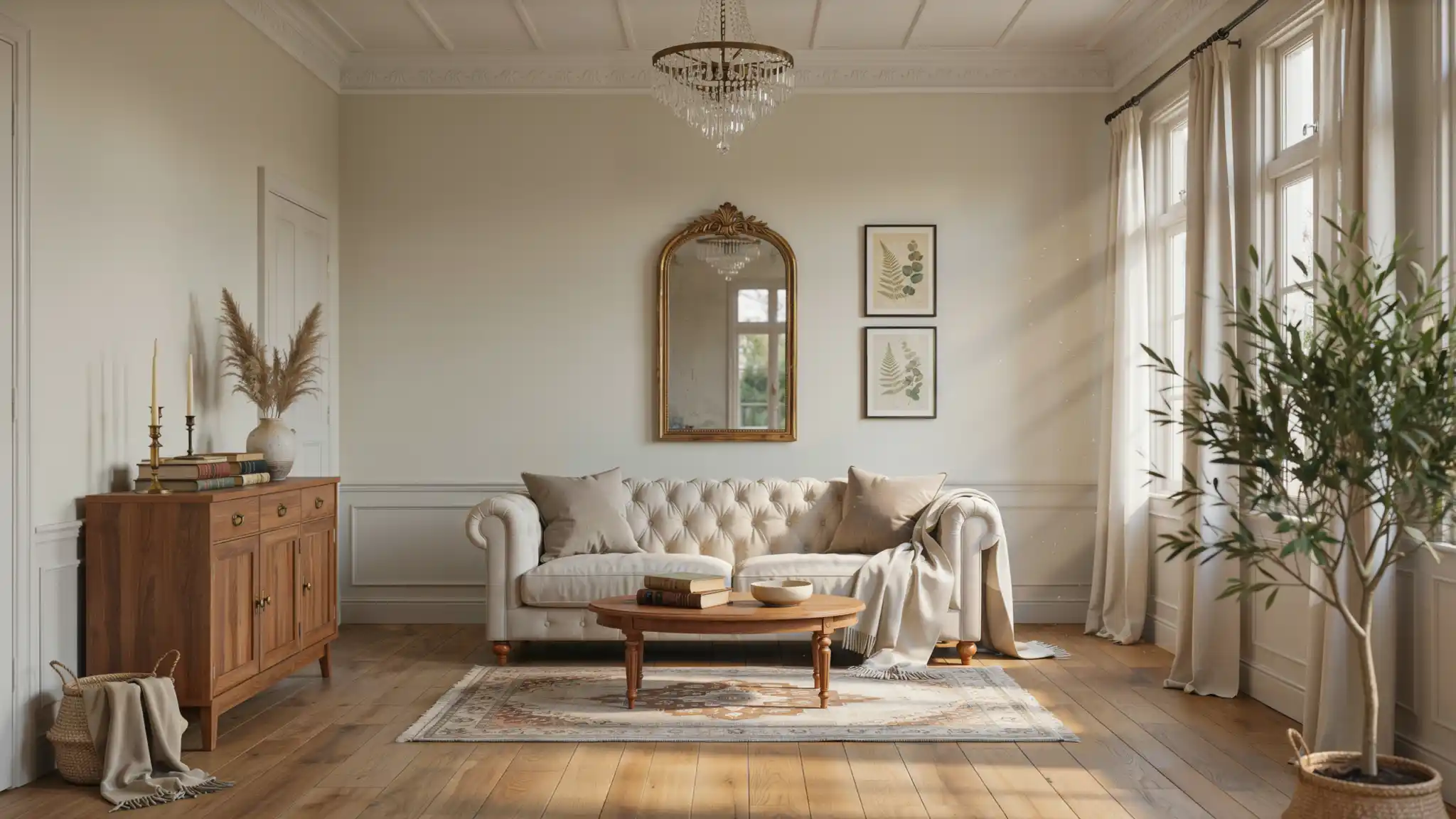
Vintage interior design can look elegant rather than outdated when timeless pieces are balanced with clean lines, neutral colors, modern furniture, and thoughtful styling. Antique wooden furniture, vintage mirrors, traditional rugs, elegant lighting, botanical artwork, and natural textures can add character and warmth while keeping a home feeling fresh and sophisticated.
The key is not to fill a room with old-fashioned pieces, but to choose a few classic elements and pair them with contemporary details. Mixing vintage furniture with modern finishes, keeping the color palette balanced, and giving statement pieces room to stand out can create a space that feels collected rather than dated.
Whether you’re decorating a living room, bedroom, dining area, or cozy corner, these 12 vintage interior design ideas will show you how to combine timeless character with modern comfort. You’ll discover simple ways to use vintage furniture, natural textures, neutral colors, statement lighting, and meaningful accessories to create a home that feels personal, elegant, and effortlessly timeless.
Table of Contents
- Antique Wooden Furniture With Clean Styling
- Soft Neutral Color Palettes
- Statement Vintage Chandeliers
- Floral Patterns Used Sparingly
- Layered Textures and Natural Fabrics
- Built-In Display Cabinets
- Vintage Mirrors for Added Light
- Brass and Aged Metal Accents
- Cozy Reading Corners
- Traditional Rugs With Updated Decor
- Meaningful Vintage Collections
- Conclusion
1. Antique Wooden Furniture With Clean Styling


Antique wooden furniture is one of the easiest ways to bring authentic character and warmth into a vintage interior. Pieces such as carved sideboards, farmhouse dining tables, wooden cabinets, vintage dressers, and old-world console tables can become beautiful focal points while adding a sense of history that new furniture often can’t replicate.
The key is to let one or two substantial vintage pieces stand out rather than filling the entire room with antiques. Pair an aged wooden cabinet with soft neutral walls, contemporary lighting, simple upholstery, or modern artwork to create contrast. This combination keeps the room feeling fresh while allowing the craftsmanship and natural character of the furniture to take center stage.
Pay attention to the condition and finish of older furniture as well. Natural wood grain, subtle imperfections, aged patina, and original hardware can add authenticity, while a carefully restored piece can give you the vintage appearance without sacrificing everyday functionality.
For a balanced look, repeat the wood tone or finish in smaller elements throughout the room. A wooden picture frame, side table, or decorative bowl can connect the larger furniture piece to the rest of the space without making the room feel overly themed.
Designer Tip: Start with one standout antique piece and build the room around it. Keeping the surrounding decor simple allows vintage furniture to feel intentional, sophisticated, and timeless rather than making the space look like a museum.
2. Soft Neutral Color Palettes


Soft neutral colors create an ideal backdrop for vintage interior design because they allow antique furniture, traditional details, and decorative accessories to stand out without making the room feel visually heavy. Shades such as warm white, cream, ivory, beige, greige, and soft gray can make a space feel brighter while creating the calm, timeless atmosphere associated with classic interiors.
Instead of choosing one neutral shade and using it everywhere, layer several related tones throughout the room. For example, pair warm ivory walls with a beige sofa, cream curtains, natural wood furniture, and textured rugs. These subtle differences add depth and prevent the space from looking flat or overly coordinated.
You can also introduce muted vintage-inspired colors such as dusty blue, sage green, faded rose, or soft olive through pillows, artwork, upholstery, and smaller accessories. These colors complement neutral backgrounds while adding personality without overwhelming the vintage aesthetic.
If you’re working with a smaller room, lighter neutrals can help reflect natural light and create a more open feeling. In larger spaces, slightly deeper beige or taupe tones can add warmth and make the room feel more intimate.
Designer Tip: Use your largest surfaces—walls, curtains, and major furniture—as the neutral foundation, then introduce vintage colors through smaller accents. This creates a sophisticated backdrop that allows antique pieces and meaningful decor to shine.
3. Statement Vintage Chandeliers


A statement chandelier can instantly give a room the elegance and character associated with vintage interior design. Crystal chandeliers, aged brass fixtures, wrought iron designs, and antique-inspired pendant lights can act as a striking focal point while adding warmth and personality to living rooms, dining areas, bedrooms, or entryways.
When choosing a chandelier, consider the room’s size, ceiling height, and existing furniture. A large fixture can work beautifully above a dining table or in a spacious living room, while a smaller vintage-inspired light may be better suited to a bedroom or compact entryway. Choose a finish that complements other details in the room, such as brass hardware, wood tones, or picture frames.
The key is balance. Let the chandelier become the main decorative feature instead of competing with multiple statement pieces. Pair an ornate light fixture with simple furniture, neutral walls, and understated accessories to create contrast. This keeps the room feeling sophisticated and collected rather than overly traditional.
For an authentic vintage atmosphere, look for details such as aged finishes, classic silhouettes, textured glass, or decorative metalwork. If you’re using a vintage fixture, make sure its electrical components are appropriate for modern use and have it professionally inspected when necessary.
Designer Tip: Treat your chandelier as the room’s jewelry. Choose one distinctive fixture that complements the overall style, then keep the surrounding decor relatively simple so its shape and craftsmanship can stand out.
4. Floral Patterns Used Sparingly


Floral patterns are a classic element of vintage interior design, bringing softness, color, and a sense of nostalgia to a room. Instead of covering every surface with floral prints, use them selectively through accent pillows, curtains, upholstered chairs, bedding, or framed botanical artwork. A single well-chosen pattern can add plenty of vintage character without making the space feel overly busy.
Consider the scale and color of the floral print when choosing your accents. Small, delicate patterns can create a traditional cottage feel, while larger botanical designs can give the room a more sophisticated and updated appearance. Muted shades such as dusty blue, sage green, faded rose, cream, and warm beige tend to blend naturally with vintage-inspired interiors.
Balance patterned pieces with solid-colored furniture and simple textiles. For example, a floral accent chair can become the focal point of a neutral living room, while floral cushions can add personality to a plain linen sofa. Keeping the surrounding elements relatively understated allows the pattern to stand out without competing for attention.
You can also repeat one or two colors from the floral design elsewhere in the room. This creates visual connection and makes the pattern feel intentionally integrated rather than randomly added.
Designer Tip: Choose one main floral pattern and build around it with coordinating solids and subtle textures. This simple approach gives you the charm of vintage decor while keeping the overall room fresh, balanced, and modern.
5. Layered Textures and Natural Fabrics


Layering natural textures is an easy way to make a vintage interior feel warm, comfortable, and lived-in without adding unnecessary clutter. Materials such as linen, cotton, wool, rattan, jute, and woven fibers introduce subtle variation while complementing the aged wood, antique furniture, and traditional details often found in vintage homes.
Start with a simple foundation and gradually build depth through different textiles. Linen curtains can soften windows, a cotton or knitted throw can add comfort to a sofa, and a wool or vintage-style rug can anchor the room. Woven baskets, textured cushions, and natural-fiber accessories can provide additional warmth while keeping the overall design relaxed.
The beauty of natural fabrics is that they don’t need to look perfectly polished. Slightly rumpled linen, visible woven textures, and the natural variations in wood and wool can give the room an authentic, collected feel. This works especially well when paired with antique furniture because the contrast between soft textiles and aged materials creates visual balance.
Try to vary textures while keeping the color palette consistent. Warm cream, beige, muted green, soft gray, and natural wood tones can help different materials work together without making the room feel busy.
Designer Tip: When a vintage room feels flat, add texture before adding more decoration. A textured rug, linen curtains, woven basket, or soft throw can often create more visual depth than another decorative object.
6. Built-In Display Cabinets


Built-in display cabinets and bookshelves can bring both character and practicality to a vintage interior. They provide a dedicated place for books, ceramics, artwork, collected objects, and family heirlooms while giving the room a sense of permanence. Glass-front cabinets can be especially effective because they protect delicate pieces while allowing them to remain part of the overall design.
For a more authentic vintage look, consider details such as paneled doors, traditional trim, aged brass hardware, or warm painted finishes. If you’re working with an existing built-in, keep its original architectural character whenever possible rather than covering it with overly modern finishes. In a newer home, a simple custom shelving unit can recreate the same collected feeling.
The most important part is how you style the shelves. Avoid filling every available space. Instead, group a few meaningful objects together and leave some empty space between them. Mix books with small ceramics, framed artwork, vintage boxes, and decorative pieces at different heights to create visual rhythm.
You can also incorporate a consistent color palette to make a varied collection feel cohesive. Warm wood tones, cream ceramics, muted greens, aged brass, and neutral textiles work particularly well with vintage interiors.
Styling Tip: Think of your shelves as a collection that has developed naturally over time. Display fewer, more meaningful pieces and leave enough breathing room around them so each object has a chance to stand out.
7. Vintage Mirrors for Added Light


Vintage mirrors are one of the easiest ways to add character, elegance, and visual depth to a room. Ornate frames in aged brass, carved wood, antique gold, or distressed finishes can introduce the craftsmanship associated with classic interiors while the reflective surface helps bounce natural light around the space.
Placement can make a significant difference. Position a mirror opposite or beside a window to reflect daylight and create a brighter atmosphere. In darker rooms, placing one near a lamp or other light source can help distribute the glow and make the space feel more open. A large mirror can also visually expand a smaller living room, bedroom, hallway, or entryway.
Choose the frame according to the overall style of your home. An elaborately carved gold frame works beautifully in a traditional setting, while a simpler aged-wood or brass frame can give a modern vintage interior a more understated look. You don’t necessarily need a perfectly matched mirror—slight signs of age and character can make the piece feel more authentic.
For a stronger focal point, lean a large vintage mirror against a wall above a console or fireplace, provided it is safely secured where appropriate. Smaller mirrors can also be grouped together to create an interesting gallery-style display.
Designer Tip: Use a vintage mirror to reflect something worth seeing, such as a window, artwork, greenery, or an attractive light fixture. This makes the mirror feel like part of the room’s composition rather than simply another wall decoration.
8. Timeless Botanical Decor


Botanical decor brings a natural, nostalgic quality to vintage interiors while adding color and visual interest without overwhelming the space. Framed botanical prints, pressed flowers, vintage-style plant illustrations, and carefully chosen greenery can introduce the timeless charm often associated with traditional homes.
For a more sophisticated look, choose botanical artwork with muted greens, faded blues, warm beige, or earthy brown tones. Display a collection of related prints in simple frames, or use one larger botanical piece as a focal point above a console, sideboard, or reading nook. The goal is to create a curated look rather than covering every wall with artwork.
Live plants can also work beautifully with vintage furniture and natural materials. Place a leafy plant in a ceramic planter, add a small vase of seasonal greenery to a side table, or use trailing plants on open shelving. Natural greenery helps soften heavier wooden furniture and brings freshness into rooms with traditional details.
You can further connect the botanical theme through subtle accessories such as floral cushions, leaf-inspired ceramics, or woven baskets. Keep these accents restrained so the room maintains a calm, collected appearance.
Designer Tip: Choose botanical pieces that share similar colors or tones rather than matching every print exactly. A slightly varied collection feels more authentic and gives your vintage interior the impression of being gathered naturally over time.
9. Brass and Aged Metal Accents


Brass and aged metal accents can add warmth, depth, and a subtle sense of history to a vintage interior. Details such as antique brass drawer pulls, vintage table lamps, aged picture frames, curtain rods, and decorative trays can introduce character without requiring a major change to the room.
Look for finishes with a slightly softened or naturally aged appearance rather than overly polished metals. Antique brass, brushed brass, bronze, and aged iron tend to pair beautifully with natural wood, linen, painted furniture, and neutral walls. These finishes can help connect different elements throughout the room while adding a small touch of elegance.
You don’t need to use metallic accents everywhere. In fact, vintage interiors often look more sophisticated when the metal details are repeated subtly. For example, brass cabinet hardware can be echoed through a table lamp or picture frame, creating consistency without making the room feel overly coordinated.
If your space already contains several metal finishes, choose one dominant finish and use other metals sparingly. This keeps the overall design cohesive while allowing individual vintage pieces to retain their character.
Designer Tip: Think of brass and aged metals as finishing details rather than the main attraction. A few thoughtfully chosen pieces can give a room warmth and vintage character without making the decor feel heavy or overly traditional.
10. Cozy Reading Corners


A cozy reading corner captures the relaxed, lived-in charm that makes vintage interiors feel so inviting. You don’t need a large room to create one—a comfortable upholstered armchair, a small wooden side table, and a warm table or floor lamp can turn an unused corner into a peaceful retreat for reading, journaling, or enjoying a quiet cup of tea.
Choose furniture with classic details that complement the rest of your decor. An antique-style armchair, curved wooden chair, or softly upholstered seat can add vintage character without requiring a complete room makeover. Layer in a small cushion, knitted throw, or linen blanket to make the space feel comfortable and lived-in.
Lighting is especially important in a reading nook. Position a warm lamp beside the chair so the area remains practical after sunset. If possible, place the chair near a window to take advantage of natural daylight while creating a connection with the outdoors.
Complete the corner with a few carefully chosen details, such as a small stack of favorite books, a vintage side table, framed botanical artwork, or a potted plant. Avoid adding too many accessories—the goal is to create a peaceful space that feels personal rather than overly styled.
Designer Tip: Look for an unused corner near a window, fireplace, or bookshelf. With one comfortable chair, good lighting, and a few meaningful details, even a small space can become one of the most charming features in a vintage-inspired home.
11. Traditional Rugs With Updated Decor


Traditional rugs can instantly add warmth, history, and character to a vintage interior. Persian-inspired patterns, faded floral designs, oriental motifs, and vintage-style rugs bring rich color and texture while helping define the seating or dining area. A well-chosen rug can also make modern furniture feel more connected to the classic character of the room.
The key is to balance a detailed rug with simpler surrounding pieces. Pair an intricate vintage rug with a neutral sofa, clean-lined coffee table, or contemporary accent chair to create contrast. Soft cream, beige, muted blue, sage green, and faded terracotta tones can work particularly well when you want a traditional pattern without making the room feel too dark or busy.
Consider the size carefully before choosing a rug. In a living room, the rug should generally be large enough to visually connect the main seating pieces. In a dining room, choose a size that leaves enough space for chairs to remain on the rug when pulled away from the table. A properly sized rug can make the entire layout feel more intentional.
If you’re decorating a smaller room, a lighter-colored traditional rug can add pattern without visually overwhelming the space. For larger rooms, a richer or more detailed design can create a strong foundation for the rest of the decor.
Designer Tip: Let the rug influence your room’s color palette. Pull one or two subtle colors from the rug into your cushions, artwork, or accessories to create a cohesive vintage look without matching everything too closely.
12. Meaningful Vintage Collections


Meaningful vintage collections can give your home a sense of personality and history that mass-produced decor simply can’t replicate. Whether you collect antique books, ceramic pieces, old photographs, vintage clocks, pottery, postcards, or small decorative objects, displaying items that have personal meaning can make your interior feel genuinely lived-in and unique.
Instead of displaying an entire collection at once, choose a few of your favorite pieces and give them enough space to stand out. Arrange them on a built-in bookshelf, vintage cabinet, console table, or open shelving. Vary the height and size of each item by combining books, framed artwork, ceramics, and small objects to create a natural, layered arrangement.
Try to group pieces by color, material, era, or theme so the collection feels intentional rather than cluttered. For example, a collection of cream-colored ceramics can create a calm display, while antique books and brass accessories can add warmth to a wooden bookshelf. Leaving some empty space between objects helps maintain a clean and sophisticated appearance.
The best collections don’t have to be valuable or rare. Family heirlooms, thrifted finds, flea-market treasures, and objects collected during travels can all contribute to a meaningful vintage interior. What matters most is that the pieces tell a story or reflect your personal taste.
Designer Tip: Don’t decorate simply to fill empty shelves. Choose vintage pieces that have a story, memory, or connection behind them. A small collection of meaningful objects will make your home feel much more authentic than a room filled with perfectly matched vintage-style accessories.
Expert Tips for Creating a Timeless Vintage Interior
Creating a vintage-inspired home is less about filling a room with antiques and more about choosing pieces that work together. A balanced approach usually combines older furniture or accessories with modern proportions, neutral backgrounds, and practical everyday furnishings. This keeps the space feeling authentic without making it look like a period display.
When selecting vintage furniture, pay attention to condition, construction, proportions, and materials rather than choosing an item simply because it looks old. Solid wood furniture, quality joinery, natural fabrics, aged metals, and well-made traditional rugs can add lasting character. If you’re buying secondhand, inspect furniture for structural damage, unpleasant odors, moisture problems, unstable joints, or signs of pests before bringing it into your home.
What to Consider Before Decorating With Vintage Pieces
Before purchasing vintage furniture or accessories, consider how each item will work with your existing space:
- Start with your color palette: Warm whites, cream, beige, muted greens, dusty blues, and natural wood tones create an easy foundation for vintage pieces.
- Mix old and new: Pair antique or vintage furniture with contemporary lighting, simple upholstery, or modern accessories to prevent the room from feeling dated.
- Check proportions: Large antique furniture can overwhelm a small room, while tiny accessories may disappear in a large space.
- Prioritize quality: Look for solid construction, durable materials, and craftsmanship rather than choosing pieces based only on appearance.
- Use patterns carefully: Floral and traditional prints add character, but combining too many competing patterns can make the room feel busy.
- Create breathing room: Leave some empty space around furniture and decorative objects so the room feels intentional rather than cluttered.
- Think about function: Vintage pieces should still work for your everyday lifestyle. Choose furniture that is comfortable, practical, and appropriate for the way you use the room.
- Check measurements: Always measure doorways, stairways, hallways, and the intended placement area before purchasing large vintage furniture.
How to Mix Vintage and Modern Decor
One of the easiest ways to make vintage decor feel current is to create contrast. Try combining an antique wooden cabinet with a simple modern sofa, a traditional rug with contemporary furniture, or an ornate mirror with clean-lined wall decor.
You can also repeat subtle elements throughout the room. For example, aged brass hardware can be echoed in a lamp or picture frame, while colors from a traditional rug can appear in cushions or artwork. This creates visual connection without making every item look perfectly matched.
How to Avoid a Cluttered Vintage Look
Vintage decorating can quickly become overwhelming when too many decorative pieces compete for attention. Instead of displaying everything you own, choose a few meaningful objects and rotate collections seasonally.
A useful approach is to give each room one or two main vintage focal points. An antique sideboard, statement chandelier, traditional rug, or large vintage mirror can provide enough character on its own. Keep surrounding furniture and accessories simpler so the focal piece has room to stand out.
A Practical Note About Vintage Furniture and Decor
Older furniture and decorative objects can vary significantly in condition and construction. Before purchasing or restoring a vintage item, inspect it carefully and consider how it will be used. Furniture intended for regular seating should be structurally sound, while electrical fixtures should be inspected and appropriately updated by a qualified professional when necessary.
For painted or unusually old pieces, especially those of uncertain age or origin, consider whether the finish could contain hazardous materials before sanding, stripping, or refinishing it. Follow applicable safety guidance and use appropriate protective measures rather than assuming an old finish is safe to disturb.
Ultimately, the best vintage interiors are personal rather than perfect. Choose pieces you genuinely enjoy, combine them with practical modern elements, and allow the room to develop gradually. This creates a home that feels collected naturally instead of decorated all at once.
Conclusion
Vintage interior design is all about finding the right balance between character and simplicity. You don’t need to fill your home with antiques or traditional patterns to create a timeless atmosphere. A carefully chosen wooden cabinet, vintage mirror, traditional rug, botanical print, or aged brass accent can add history and personality while still feeling fresh and modern.
The most successful vintage interiors combine old and new in a thoughtful way. Pair antique furniture with neutral colors, layer natural fabrics for warmth, use floral patterns selectively, and leave enough open space for each meaningful piece to stand out. This approach keeps the room comfortable and sophisticated rather than making it feel dated or cluttered.
Whether you’re refreshing one room or redesigning your entire home, start with a few elements that genuinely appeal to you. Add pieces gradually, focus on quality and personal meaning, and let your style develop naturally over time.
With the right balance of vintage charm, modern simplicity, and thoughtful styling, you can create a home that feels warm, personal, elegant, and timeless—a space that looks beautiful today and continues to feel inviting for years to come.
Frequently Asked Questions
1. What is vintage interior design?
Vintage interior design combines older furniture, traditional patterns, classic architectural details, and nostalgic accessories with thoughtful modern styling. The goal is to create a space with character and history while keeping it comfortable and relevant to contemporary living.
2. How can I make my home look vintage without making it feel old-fashioned?
Mix vintage pieces with modern furniture, neutral colors, clean lines, and simple accessories. For example, pair an antique wooden cabinet with a contemporary sofa or place a traditional rug beneath modern furniture. This contrast helps vintage elements feel intentional and fresh.
3. What colors work best for vintage interior design?
Warm neutrals such as cream, ivory, beige, and soft gray work especially well. You can introduce muted shades of sage green, dusty blue, faded rose, terracotta, or olive to add vintage character without overwhelming the room.
4. What furniture is best for a vintage-style home?
Antique wooden cabinets, sideboards, traditional dining tables, upholstered armchairs, vintage desks, and classic bookshelves are excellent choices. Look for pieces with quality construction, natural materials, and proportions that work with the size of your room.
5. Can vintage and modern furniture be mixed together?
Yes. In fact, combining vintage and modern furniture is one of the easiest ways to create a sophisticated interior. Use vintage pieces for character and modern furniture for comfort, simplicity, and everyday functionality.
You May Also Like
If you love timeless interiors, don’t stop here! Explore more home decorating ideas to transform every corner of your home.
- 21 Japandi Living Room Ideas for a Calm and Stylish Home
- 20 Scandinavian Living Room Ideas for a Modern Cozy Home
- 21 Double Height Living Room Ideas to Make Your Home Feel Grand and Bright
- 20 Rustic Bathroom Ideas That Never Go Out of Style
- 23 Small Balcony Ideas That Add Charm, Comfort, and Functionality
- 18 Cozy Home Office Ideas to Create a Warm and Productive Workspace

